
COMPARATIVE ECONOMIC AND FINANCIAL ASPECTS OF TOURISM FLOWS IN SERBIA AND NEIGHBORING COUNTRIES

Abstract
This paper presents a comparative economic and financial analysis of tourism flows in Serbia and selected neighboring and nearby countries in Southeast and Central Europe, including Albania, Bosnia and Herzegovina, Bulgaria, Montenegro, Croatia, Hungary, North Macedonia, and Romania. The study examines tourist arrivals and overnight stays, international tourism revenues, and the direct and total contributions of tourism to gross domestic product (GDP) and employment. Particular attention is given to the period from 2019 to 2023, covering the pre-pandemic period, the COVID-19 disruption, and the subsequent recovery. Using secondary data from national statistical offices, Eurostat, and the World Travel & Tourism Council, the study applies a descriptive comparative methodology to identify similarities and differences in tourism performance and economic significance. The findings indicate substantial differences in tourism intensity and economic dependence across the observed countries, while Serbia recorded a comparatively strong post-pandemic recovery. The analysis also highlights the importance of methodological differences among national statistical systems, particularly in the interpretation of Albania's arrival data. The results provide a comparative empirical basis for assessing Serbia's tourism position and identifying areas for further research and policy development.
Article
Introduction
Tourism is one of the most dynamic sectors of modern economies. In addition to generating direct revenue through the spending of domestic and international visitors, tourism stimulates the growth of numerous related sectors - from transportation and trade to construction, services, and creative industries. Thanks to its wide range of direct, indirect, and induced effects, this sector is increasingly recognized as one of the key drivers of economic growth, structural transformation, and local development. Its role becomes particularly prominent in countries striving to diversify their economic structure, improve regional balance, and create new employment opportunities. In this context, tourism represents a potential not only for increasing gross domestic product and employment, but also for strengthening a country’s international position through enhanced competitiveness and the attraction of foreign investment.
Tourism, therefore, plays a significant role in the modern economy, with the capacity to stimulate a broad spectrum of economic activities - from hospitality and transportation to trade and local employment. In the countries of Southeast Europe, including Serbia and its neighbors, tourism is gaining importance as a strategic development activity. Despite shared historical, cultural, and natural characteristics, each country in the region is developing at a different pace and based on distinct models of tourism valorization. Factors such as accessibility, infrastructure, marketing visibility, and political stability play a crucial role in shaping tourism flows and financial outcomes.
This paper analyzes Serbia’s position in relation to neighboring countries by comparing the volume and quality of tourism traffic, considering both quantitative indicators and structural factors that influence the sustainability and competitiveness of the tourism sector. The focus is on assessing the financial impact of tourism and its role in the overall economic development of the region. Through this analysis, the aim is to identify opportunities for improving Serbia’s tourism development policy, drawing on the experiences and results of its neighbors.
Literature review
The analysis of the economic aspects of tourism flows requires reliance on a multidisciplinary body of literature, encompassing theoretical and empirical research in the fields of tourism, macroeconomics, regional development, and statistical modeling. A review of relevant literature highlights the importance of tourism as a driver of economic growth, a mechanism for increasing employment, and a tool for improving the current account balance - particularly in countries rich in natural and cultural resources. Studies focusing on the economic contribution of tourism often point to a strong correlation between the growth of tourism activities, gross domestic product (GDP), and employment. Emphasis is placed on the direct and indirect effects tourism has on national and regional economies, especially in developing and tourism-dependent countries.
The classical theoretical framework for analyzing tourism’s economic contribution is based on works such as Archer (1977) and Fletcher (1989), who laid the foundations for input-output analyses to assess the direct, indirect, and induced effects of tourism. These models were later refined through the application of the Tourism Satellite Account (TSA) methodology, developed by the World Tourism Organization in collaboration with the OECD and the European Commission. TSA represents a standardized approach to measuring tourism activity within the system of national accounts.
In the context of quantitative measurement of tourism’s impact, numerous studies use data from the World Travel & Tourism Council (WTTC), which provides reliable indicators of tourism’s direct and total contribution to GDP and employment. In 2024, tourism generated approximately 10% of global GDP and supported over 357 million jobs (Travel & Tourism Economic Impact Research – EIR). These figures confirm the systemic importance of the sector, not only in developed but also in transitional economies. An empirical study by Čerović et al. (2015) shows that an increase in tourist arrivals positively affects economic growth in Western Balkan countries, particularly in Montenegro. The authors use a panel regression model to assess tourism’s impact on GDP and highlight differences among countries in their degree of tourism dependence. Similarly, Vuković et al. (2023) examine the effect of employment growth in tourism on GDP using a dynamic panel threshold model. Their results indicate that a 1% increase in tourism employment can raise GDP by between 0.15% and 0.61%, depending on the country’s institutional and market context.
Beyond contemporary analyses, a meta-analysis conducted by Giotis (2022), covering 36 studies, shows an average regression coefficient of 0.9 between tourism and employment. The author concludes that most research confirms tourism’s significant impact on the labor force, especially in regions with well-developed tourism products. In the case of Western Balkan countries, a longitudinal analysis by Selimi et al. (2017) reveals that a 1% increase in international tourist arrivals can contribute approximately 0.08% to the growth of real per capita income, with North Macedonia standing out as a statistically significant example.
Regarding Southeast European countries, research by Burlea Schiopoiu and Ozuni (2021) emphasizes the potential of Albania’s tourism sector, while Csapó and Marton (2017) highlight the role of spa and wellness tourism in Hungary. Additionally, Novović and Lukić (2025) conduct a comparative analysis of the impact of tourism flows on macroeconomic indicators in Serbia and Bosnia and Herzegovina, while Ružić and Demonja (2013) examine the natural and anthropogenic foundations of tourism in Croatia, emphasizing the uneven spatial distribution of tourism flows. In the context of Serbia and neighboring countries, the literature underscores the importance of strategic investments in infrastructure, sustainable tourism development, and international market promotion as key competitiveness factors (Hall, 1998; Ubavić, 2016; Jankovic et al., 2017). These analyses point to the significance of institutional frameworks, investment climate, and marketing strategies in shaping tourism demand.
In Serbia and its neighboring countries, protected natural areas hold significant potential, as discussed by Štetić et al. (2019), who highlight opportunities for developing sustainable tourism based on natural values. A special contribution to understanding the financial aspect of tourism is provided by studies analyzing tourism revenues, expenditures, investments in the hospitality sector, and the sustainability of tourism-driven economic development (Mihalič, 2000; Dwyer et al., 2003; Palazov & Stanchev, 2007). This literature emphasizes the need for balancing tourism growth with resource preservation, as well as strengthening institutional support for collecting, analyzing, and utilizing statistical data in decision-making processes. Furthermore, contemporary research highlights the connection between tourism and broader macroeconomic indicators, including various methods used to measure tourism’s impact on economic growth (Ivanov & Webster, 2013; Brida et al., 2016; Temjanovski et al., 2018). These studies provide an empirical foundation for understanding how tourism functions as a transmission mechanism within national economies.
For the purposes of this research, official statistical publications from national statistical offices of Serbia (Republički zavod za statistiku, 2024a), Bosnia and Herzegovina (Agencija za statistiku Bosne i Hercegovine, 2024; Federalni zavod za statistiku Bosne i Hercegovine, 2024; Republički zavod za statistiku, 2024b), Albania (INSTAT, 2022, 2025), North Macedonia (Државен завод за статистика, 2025), Montenegro (Monstat, 2024), and other countries in the region were used, along with databases from Eurostat. These sources enable valid comparative analysis and contribute to the standardization of indicators used in regional research.
Based on the reviewed literature, it can be concluded that there is a solid theoretical and empirical foundation for studying tourism flows through a financial-economic approach. However, there remains a need for deeper research into specific factors influencing divergences among countries in the region, particularly regarding the structure of tourism supply, seasonality, and investment capacity.
Research methodology
The methodological framework of this research is based on a comparative quantitative analysis of key indicators of tourism flows and their economic significance in Serbia and neighboring countries. The aim is to identify similarities, differences, and development trends in the field of tourism, with particular emphasis on financial aspects, including international tourism revenues and tourism’s contribution to gross domestic product (GDP) and employment. The analysis relies on secondary data collected from reliable and publicly available sources. Key data sources include reports from Eurostat, national statistical offices of the analyzed countries, and publications from the World Travel & Tourism Council (WTTC). WTTC estimates of the direct and total economic contribution of Travel & Tourism are treated as standardized estimates for comparative purposes and are not assumed to be identical in methodological terms to tourism indicators derived directly from national statistical accounts. Additionally, the study incorporates findings from previous academic and professional research in the field of tourism, which supports and enables comparison of the obtained results. The analysis covers the period from 2019 to 2023, allowing for an overview of the pre-pandemic, pandemic, and post-pandemic phases. This timeframe was carefully selected to provide relevant insights into the transformation and recovery of the tourism sector in the region. Countries included in the comparative analysis, alongside Serbia, are Albania, Bosnia and Herzegovina, Bulgaria, Croatia, Hungary, Montenegro, North Macedonia, and Romania. The selection criteria for these countries are based on geographic proximity, similar historical and economic contexts, and the comparability of tourism indicators. Descriptive statistical methods were applied in the analytical process, focusing on absolute and relative indicators (number of tourist arrivals, number of overnight stays, tourism revenues, contribution of tourism to gross domestic product (GDP), and jobs supported by tourism), as well as rates of change during the analyzed period. Based on these indicators, a comparative analysis of Serbia’s position relative to other countries in the region was conducted, identifying key factors influencing the success of tourism development. The results are presented in tabular and narrative form for clarity and ease of interpretation. Special attention was given to the analysis of relevant economic parameters that reflect the economic importance of tourism. The methodological framework also considers potential limitations related to data reliability, including differences in statistical methodologies among countries and constraints of secondary sources. The application of this methodology enables not only a quantitative assessment of tourism’s economic contribution but also a deeper understanding of the factors shaping tourism demand and its significance for the region. The methodology provides a descriptive empirical basis for comparing tourism performance across the selected countries and for identifying areas that warrant further investigation.
Results and discussion
Serbia and the countries in its vicinity together form a region with an exceptionally favorable tourism position, thanks to the diversity of natural and cultural-historical resources, as well as well-developed transportation connections that enable easy access to various attractions. Their Central European and Balkan location makes the region accessible to a large number of tourists from across Europe, especially via highways, railways, and air routes, while the Danube River further connects multiple countries through river tourism.
The combination of mountainous, continental, and Mediterranean environments offers opportunities for various forms of tourism, ranging from cultural and religious, to spa and rural, as well as summer and winter tourism. Proximity to developed markets and the EU membership of certain countries enhance the tourism significance of this area, enabling regional cooperation and joint promotion of the countries involved. Table 1 presents the basic socio-economic characteristics of the analyzed area.
Table 1: Basic Data for Serbia and Neighboring Countries (2023)
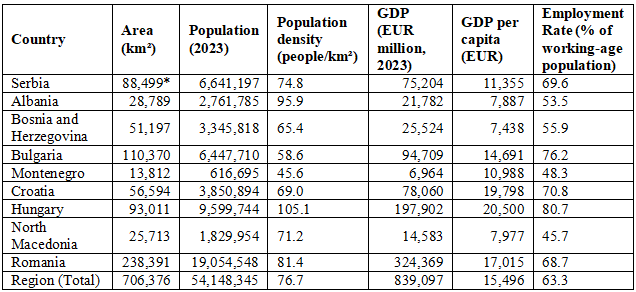
* Including Kosovo and Metohija.
Source: Authors based on Eurostat data and national statistical reports
The data from Table 1 indicate that Serbia and its neighboring countries represent a territorially and demographically diverse area. Serbia has approximately 6.6 million inhabitants (excluding Kosovo and Metohija), placing it among the medium-sized countries in the region. Hungary (over 9.5 million) and Romania (over 19 million) have larger populations, while Montenegro is the smallest, with only 616,000 inhabitants. The highest population densities are found in Hungary and Albania - 105.1 and 95.9 people per km² respectively - while Montenegro has the lowest (45.6). The region is demographically varied, with just over 54 million inhabitants, and is marked by trends of depopulation and migration present in nearly all countries. Covering more than 700,000 km², the region holds significant strategic and developmental potential.
Serbia has a notable GDP within the region - €75.2 billion - but still lags behind more developed neighbors such as Romania (€324.4 billion), Hungary (€197.9 billion), and Croatia (€78 billion). Romania has the largest economy in the region, while Montenegro has the smallest, with only €7 billion. These figures highlight the economic disparities among geographically close countries with vastly different levels of development. Serbia’s GDP per capita stands at approximately €11,355, similar to Montenegro’s (€10,988). Higher GDP per capita values are recorded in Hungary (€20,500), Croatia (€19,798), Romania (€17,015), and Bulgaria (€14,691), while the lowest are in Bosnia
and Herzegovina (€7,438) and Albania (€7,887). The total regional GDP amounts to €839 billion, with an average GDP per capita of €15,496.
The highest employment rate among the working-age population (ages 20–64) is found in Hungary (80.7%), followed by Croatia (70.8%), Serbia (69.6%), and Romania (68.7%). The lowest employment rates are in Montenegro (48.3%) and North Macedonia (45.7%). Overall, the region is highly diverse in terms of economic indicators, which influences economic, political, and regional cooperation - where tourism plays a particularly important role.
Due to its central position in the Balkans and its proximity to a number of countries in Southeast and Central Europe, Serbia has considerable potential for developing regional tourism. Good relations with neighboring and nearby states can facilitate border crossings, joint tourism projects, the promotion of cultural and natural diversity, and the development of cross-border routes, such as cycling, wine, and hiking trails. Additionally, countries with higher GDP per capita, such as Croatia and Hungary, represent important potential outbound markets. Strong transportation connectivity and joint promotional efforts can facilitate tourist arrivals, while political stability and perceptions of safety may further contribute to the attractiveness of the region. Many visitors also combine several countries within a single trip, creating opportunities for regional tourism cooperation.
Dynamics of tourism flows - Quantitative comparative aspect
Tourism flows in Serbia and neighboring countries have undergone significant changes in recent years due to global and regional factors, including the pandemic, geopolitical events, and economic conditions. This is best illustrated by the tabular overview of the total number of tourists (domestic and foreign) and overnight stays.
Table 2: Tourist Arrivals and Overnight Stays – Serbia and Neighboring Countries (2019–2023)
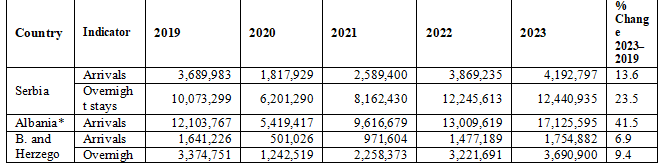
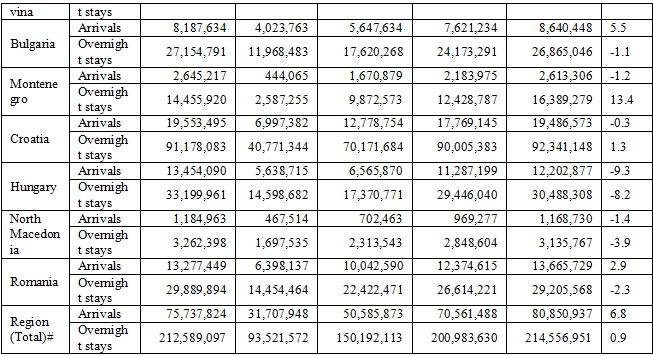
* For Albania, the number of arrivals refers to entries of Albanian and foreign citizens recorded at the national border, as reported by INSTAT, and therefore is not fully comparable with tourist arrivals recorded through accommodation statistics in the other countries. Data on overnight stays from the accommodation statistics were not incorporated into Table 2 because a fully harmonized annual series comparable with the data used for the other countries was not available in the source set used for this analysis.
# Accordingly, the regional total for tourist arrivals should be interpreted as an aggregate of reported national indicators rather than as a fully harmonized regional measure of tourist arrivals. The regional total for overnight stays excludes Albania because a comparable annual series was not incorporated into the analysis.
Source: Authors, based on Eurostat and national statistical reports
Based on the data on tourist arrivals and overnight stays for Serbia and the region from 2019 to 2023, the following conclusions and country-specific comments can be drawn, with emphasis on post-pandemic recovery and tourism trends.
Serbia shows a stable recovery and growth. Between 2019 and 2023, tourist arrivals increased by 13.6%, while overnight stays increased by 23.5%. These growth rates were higher than the corresponding regional aggregate changes reported in Table 2, although the regional figures should be interpreted with caution because of differences in statistical coverage, particularly in the case of Albania. The growth in tourism activity was accompanied by an increase in foreign tourist arrivals and a broader diversification of source markets. Major tourism destinations include Belgrade (urban tourism, nightlife, and conferences), Novi Sad (cultural events and festivals), Zlatibor, Kopaonik and Tara (mountain and winter tourism), and Vrnjačka Banja and Sokobanja (spa tourism). The available data indicate continued development of rural, spa, cultural, and gastronomic tourism, while improved air connectivity may also have contributed to the expansion of international visitor flows.
Albania records the highest increase in the reported arrival indicator among the countries included in the comparison, with a 41.5% increase between 2019 and 2023. However, this indicator is not fully comparable with the tourist-arrival statistics reported for the other countries, as it refers to entries of Albanian and foreign citizens recorded at national border points rather than arrivals recorded through accommodation statistics. Consequently, the Albanian figure should be interpreted as an indicator of cross-border movements rather than as a fully harmonized measure of tourist arrivals. Albania nevertheless recorded strong growth in international tourism revenues during the same period, suggesting a substantial expansion of its international tourism activity. The country's coastline and cultural and natural attractions contribute to its tourism potential, although differences in infrastructure and statistical coverage should be taken into account when comparing Albania with the other countries in the sample. It stands out as one of the most promising destinations, especially among young travelers, digital nomads, and tourists from Western Europe, thanks to competitive prices and an attractive coastline. Popular coastal areas include Durrës, Sarandë, and Vlorë. Challenges remain in underdeveloped infrastructure, which may limit full growth potential (Burlea‑Schiopoiu & Ozuni, 2021).
Bosnia and Herzegovina shows steady recovery, with a 6.9% increase in arrivals and 9.4% in overnight stays. The development of tourism may be influenced by factors such as the level of international promotion, infrastructure, and the broader institutional and political environment (Novović & Lukić, 2025). The country is increasingly positioned as a destination for sustainable and authentic tourism, known for its preserved nature and rich cultural heritage. Historic towns, natural landscapes, and wine-adventure routes make it a serious regional competitor.
Bulgaria shows a modest increase in arrivals (5.5%) but a decline in overnight stays (-1.1%), suggesting shorter average stays. The simultaneous increase in arrivals and decline in overnight stays indicates a reduction in average length of stay. The available data alone do not establish whether this resulted from changes in destination attractiveness, source markets, travel behavior, or other factors. Tourism is traditionally focused on summer (Black Sea) and winter (Bansko) tourism, especially among Eastern European visitors (Palazov & Stanchev, 2007). Affordable prices remain a key advantage.
Montenegro’s tourist arrivals in 2023 are slightly below 2019 levels (-1.2%), but overnight stays increased by 13.4%, indicating longer visitor stays. Tourism represents one of the most important sectors of the Montenegrin economy, with a particularly high total contribution to GDP. Main sources of tourists: Serbia, Russia, Ukraine, EU countries. Popular destinations: Budva, Kotor, Herceg Novi, Ulcinj, Durmitor. Besides coastal tourism, mountain and adventure tourism are growing (Jankovic et al., 2017).
Croatia had broadly returned to its pre-pandemic level by 2023, with arrivals remaining 0.3% below and overnight stays 1.3% above the 2019 level. The relatively limited change compared with 2019 may reflect a combination of market maturity, changing travel patterns, price conditions, and competitive pressures within the regional tourism market. Still, Croatia is one of the leading tourist destinations in the Balkans, recording approximately 19.5 million tourist arrivals in 2023. Focus: coastal tourism (Dubrovnik, Split, Zadar, Istria) and inland tourism (Zagreb, Plitvice).
Hungary, despite being one of the more developed countries in the region, recorded the largest decline: -9.3% in arrivals and -8.2% in overnight stays. The slower recovery may be associated with changes in travel restrictions, inflationary pressures, and changes in international travel demand; however, the present analysis does not allow these factors to be identified as causal determinants. Still, Hungary remains a major Central-Eastern European destination. Key trends: wellness and health tourism, digital technologies, smart-city initiatives in Budapest, and domestic tourism incentives (Csapó & Marton, 2017). EU membership supports promotion and tourism development.
North Macedonia recorded a near-complete recovery in tourist arrivals by 2023. The number of tourist arrivals reached 1,168,730, approximately 1.4% below the 2019 level of 1,184,963. However, the number of overnight stays amounted to 3,135,767 in 2023, which was approximately 3.9% below the 2019 level of 3,262,398. The available data therefore indicate that, although the number of tourist arrivals had almost returned to its pre-pandemic level, overnight stays had not yet fully recovered. The divergence between the two indicators suggests that the post-pandemic recovery in North Macedonia was characterized by a relatively stronger recovery in the number of visitors than in the total volume of overnight stays. However, the available aggregate indicators alone do not allow a precise determination of the factors underlying this development. The country's major tourism destinations include Skopje and Ohrid, while cultural, lake, mountain, and nature-based tourism represent important components of its tourism offer (Temjanovski et al., 2018). The observed results therefore indicate that North Macedonia had largely restored its pre-pandemic tourist-arrival volume by 2023, while the number of overnight stays remained slightly below the 2019 level.
Romania records a modest increase in arrivals (2.9%) and a slight decline in overnight stays (-2.3%), indicating a reduction in the average number of overnight stays per arrival. Tourism focuses on nature and culture, with attractions like Transylvania, Bucharest, and the Danube Delta. Policy priorities identified in national tourism-development documents include sustainable development and digitalization. Challenges include uneven infrastructure outside urban centers and the need for stronger international promotion. Specialized tourism (wine, rural, adventure) has strong growth potential (Government of Romania, 2024).
Overall, the data indicate a broad recovery of tourism activity in the observed region between 2019 and 2023. Tourist arrivals increased by approximately 6.8%, while overnight stays increased by approximately 0.9% based on the corrected country-level data. These aggregate figures should nevertheless be interpreted with caution because the indicators are not fully harmonized across all countries, most notably in the case of Albania, where the reported arrival indicator is based on border-crossing records rather than accommodation statistics. Within this context, Serbia recorded stronger growth in both arrivals and overnight stays than the regional aggregate, while substantial differences remained among individual countries.
Serbia and Albania contribute substantially to the increase in the reported arrival indicators, although the Albanian figure is not directly comparable with accommodation-based tourist arrivals. Hungary recorded declines in both arrivals and overnight stays relative to 2019, while North Macedonia showed a mixed pattern, with tourist arrivals remaining slightly below the 2019 level and overnight stays declining by approximately 3.9%. For Serbia, further development of rural, spa, cultural, and gastronomic tourism, together with efforts to extend visitor stays, may strengthen the economic effects of tourism. The comparative dynamics of tourist arrivals are presented in Graph 1.
Graph 1: Tourist Arrivals in Serbia and Neighboring Countries, 2019–2023
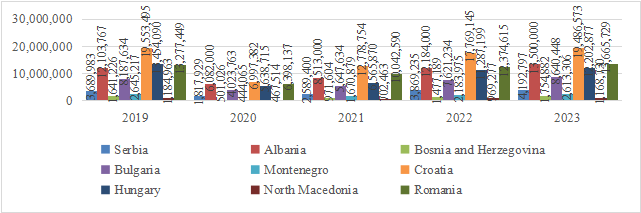
Source: Authors based on Table 2
Tourism revenues – Financial aspect of comparative analysis
Tourism revenues represent a significant component of the economy of Serbia and its neighboring countries. In recent years, the region has experienced a steady increase in interest from both domestic and international visitors, contributing to the development of hospitality, transportation, trade, and other related sectors. Natural beauty, rich cultural and historical heritage, and culinary diversity in Serbia and surrounding countries are key factors in their positioning on the international tourism market. Although there are differences in the level of development of tourism infrastructure, these countries are investing in promotion, modernization of services, and preservation of attractive destinations, with the aim of making tourism an even more important driver of economic growth. A comparative overview of international tourism revenues over a five-year period is presented in the following table.
Table 3: International Tourism Revenues (in million USD) – Serbia and Neighboring Countries, 2019–2023
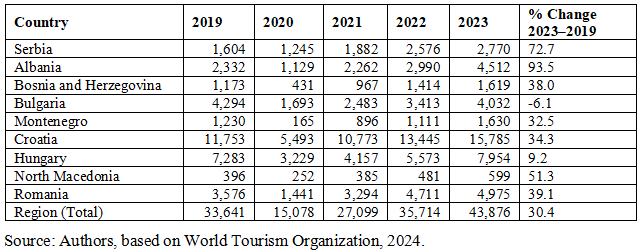
The data presented show that all analyzed countries experienced a sharp decline in international tourism revenues in 2020, as a direct consequence of the COVID-19 pandemic, border closures, and restrictions on international movement. However, the following three years saw a gradual - and in some cases accelerated - recovery, with certain countries surpassing their pre-pandemic revenue levels by 2023.
Between 2019 and 2023, Serbia’s international tourism revenues demonstrated significant growth dynamics despite the crisis. In 2019, revenues amounted to USD 1,604 million, dropping to USD 1,245 million in 2020 due to international travel restrictions. A steady recovery followed: USD 1,882 million in 2021, USD 2,576 million in 2022, and a record USD 2,770 million in 2023 - an increase of 72.7% compared to 2019. The increase may be associated with the broader recovery of international travel and the continued development and promotion of Serbia as a regional tourism destination; however, the present analysis does not establish a causal relationship.
Albania recorded exceptionally strong growth in international tourism revenues during the same period, despite the pandemic-induced decline. Revenues fell from USD 2,332 million in 2019 to USD 1,129 million in 2020, nearly halved due to global travel restrictions. By 2021, revenues nearly recovered to USD 2,262 million, rising to USD 2,990 million in 2022 and peaking at USD 4,512 million in 2023 - an increase of 93.5% compared to 2019. This substantial growth suggests Albania has become one of the fastest-growing tourism destinations in the region, owing to its natural assets, competitive pricing, and enhanced international recognition.
Bosnia and Herzegovina showed a clear recovery trend between 2019 and 2023. Revenues dropped from USD 1,173 million in 2019 to just USD 431 million in 2020, reflecting the impact of global health measures and border closures. Partial recovery followed: USD 967 million in 2021, USD 1,414 million in 2022, and USD 1,619 million in 2023. The total increase of 38% compared to 2019 indicates a stable but slower recovery, with potential for further development and stronger international promotion.
Bulgaria’s international tourism revenues followed global trends of pandemic-induced decline and gradual recovery. Revenues fell from USD 4,294 million in 2019 to USD 1,693 million in 2020. Recovery progressed through USD 2,483 million in 2021 and USD 3,413 million in 2022, reaching USD 4,032 million in 2023 - nearly returning to pre-pandemic levels. Although not yet exceeding 2019 figures, Bulgaria demonstrates stable growth, reaffirming its position as a key tourism destination in Southeast Europe, particularly due to its Black Sea resorts and developed infrastructure.
Montenegro experienced pronounced fluctuations in international tourism revenues, with a sharp decline during the pandemic and gradual recovery thereafter. Revenues dropped from USD 1,230 million in 2019 to just USD 165 million in 2020 - one of the steepest declines in the region. Recovery followed: USD 896 million in 2021, USD 1,111 million in 2022, and USD 1,630 million in 2023 - a 32.5% increase compared to 2019. This growth is consistent with a strong recovery of international tourism activity in Montenegro.
Croatia recorded the highest international tourism revenues among regional countries during the observed period, with a strong recovery and growth trend. Revenues fell from USD 11,753 million in 2019 to USD 5,493 million in 2020. By 2021, revenues nearly doubled to USD 10,773 million, surpassing pre-pandemic levels in 2022 with USD 13,445 million, and reaching a record USD 15,785 million in 2023 - an increase of 34.3% compared to 2019. The country's developed coastal tourism base and strong international market position provide an important context for interpreting these results.
Hungary underwent a phase of sharp decline and gradual recovery in international tourism revenues between 2019 and 2023, with moderate growth compared to pre-pandemic levels. Revenues dropped from USD 7,283 million in 2019 to USD 3,229 million in 2020. Recovery followed: USD 4,157 million in 2021, USD 5,573 million in 2022, and USD 7,954 million in 2023 - an increase of 9.2% compared to 2019. This moderate growth reflects the stability of Hungary’s tourism sector, which relies on rich cultural offerings, spa tourism, and urban destinations like Budapest, within a tourism structure that includes cultural, wellness, and urban tourism.
North Macedonia recorded a gradual recovery in international tourism revenues between 2019 and 2023. Revenues fell from USD 396 million in 2019 to USD 252 million in 2020. By 2021, revenues approached pre-pandemic levels at USD 385 million, rising to USD 481 million in 2022 and USD 599 million in 2023 - an increase of 51.3% compared to 2019. This growth indicates increasing tourist interest, driven by cultural and historical attractions, natural beauty, affordable prices, and efforts to improve infrastructure and international promotion.
Romania demonstrated strong recovery and moderate growth in international tourism revenues after the pandemic-induced decline. Revenues dropped from USD 3,576 million in 2019 to USD 1,441 million in 2020. By 2021, revenues nearly doubled to USD 3,294 million, rising to USD 4,711 million in 2022 and USD 4,975 million in 2023 - an increase of 39.1% compared to 2019. The recovery occurred alongside continued efforts to promote destinations and improve tourism services, although the contribution of these factors cannot be isolated using the present methodology.
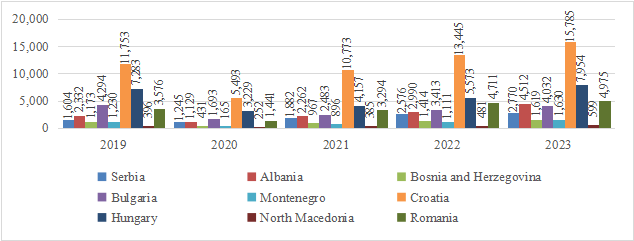
Total international tourism revenues for the region encompassing Serbia and neighboring countries amounted to USD 33,641 million in 2019, serving as a pre-pandemic benchmark. In 2020, revenues fell to USD 15,078 million due to the COVID-19 pandemic - a decline of over 50% compared to the previous year. A significant recovery followed in 2021, with revenues increasing to USD 27,099 million, followed by a further rise to USD 35,714 million in 2022 and USD 43,876 million in 2023. Compared with 2019, total international tourism revenues increased by 30.4% in 2023. The comparative dynamics of international tourism revenues are presented in Graph 2.
Graph 2: International Tourism Revenues (in Millions of USD) in Serbia and Neighboring Countries, 2019–2023
Source: Authors based on Table 3
In general, the region has demonstrated a high degree of recovery in the post-pandemic period, with most countries surpassing their previous levels of tourism revenues. However, there are pronounced differences in the intensity and structure of this growth, shaped by varying national policies, the degree of destination attractiveness, available capacities, and the effectiveness of adaptation to new demands and expectations in the tourism market.
Contribution of tourism to gross domestic product and employment
In Serbia and neighboring countries, tourism is increasingly recognized as one of the pillars of sustainable economic development. Despite varying levels of development in tourism offerings, most of these countries recorded an increase in the absolute economic contribution of tourism in the post-pandemic period, although its relative contribution to GDP did not increase uniformly across all countries. Examining these trends through a comparative analysis of key macroeconomic indicators - especially tourism’s share in gross domestic product (GDP) and employment - provides deeper insight into the significance and potential of tourism as a driver of economic growth at both national and regional levels.
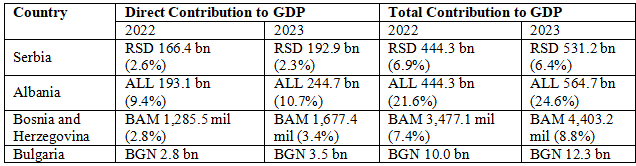
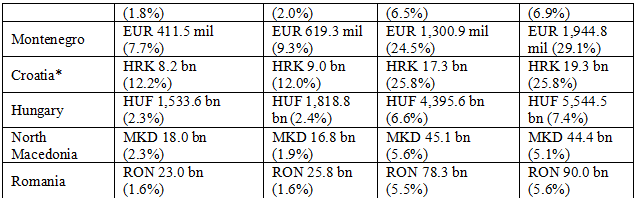
Table 4: Contribution of Tourism to GDP – Serbia and Neighboring Countries in 2022 and 2023
* For Croatia, the 2022 and 2023 WTTC estimates are presented in HRK, following the currency denomination used in the original WTTC dataset. This does not imply that HRK remained the official currency of Croatia in 2023.
Source: Authors, based on World Travel & Tourism Council (2024, 2023). Travel & Tourism Economic Impact – Serbia and Neighboring Countries
The analysis of direct and total contributions of tourism to GDP across the region reveals significant differences in the development level and importance of the tourism sector within national economies. Two representative years - 2022 and 2023 - were selected for this analysis.
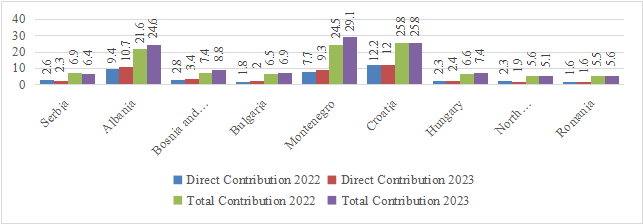
In 2022, Serbia recorded a direct tourism contribution to GDP of RSD 166.4 billion, accounting for 2.6% of total GDP. In 2023, this amount increased to RSD 192.9 billion, although its relative share declined slightly to 2.3%. The total contribution was more substantial: RSD 444.3 billion (6.9%) in 2022 and RSD 531.2 billion (6.4%) in 2023. These figures indicate stable growth in absolute terms, but also a partial deceleration in tourism’s relative significance within the overall economic structure.
Albania reported a significantly higher share of tourism in GDP, with direct contributions of ALL 193.1 billion (9.4%) in 2022 and ALL 244.7 billion (10.7%) in 2023. The total contribution was even more pronounced: ALL 444.3 billion (21.6%) in 2022 and ALL 564.7 billion (24.6%) in 2023, highlighting a high degree of dependence of the Albanian economy on tourism. This trend reflects the country’s strong orientation toward developing tourism as a key source of national income.
Bosnia and Herzegovina achieved notable growth - direct contribution increased from BAM 1,285.5 million (2.8%) in 2022 to BAM 1,677.4 million (3.4%) in 2023, while total contribution rose from BAM 3,477.1 million (7.4%) to BAM 4,403.2 million (8.8%). These indicators are consistent with a broader recovery of tourism activity; however, the present analysis does not establish whether infrastructure investment or changes in urban tourism were specific determinants of this growth.
Bulgaria recorded moderate growth - direct contribution amounted to BGN 2.8 billion (1.8%) in 2022 and increased to BGN 3.5 billion (2.0%) in 2023. Total contribution rose from BGN 10.0 billion (6.5%) to BGN 12.3 billion (6.9%), with seasonal tourism, particularly along the Black Sea coast, representing an important component of the country's tourism activity.
Montenegro experienced pronounced growth - direct contribution rose from EUR 411.5 million (7.7%) in 2022 to EUR 619.3 million (9.3%) in 2023, while total contribution increased from EUR 1,300.9 million (24.5%) to EUR 1,944.8 million (29.1%). These figures confirm tourism’s pivotal role in Montenegro’s economy and its dependence on the success of the summer season.
Croatia traditionally stands out as the country with one of the highest shares of tourism in GDP in the region. In 2022, direct contribution reached HRK 8.2 billion (12.2%), increasing to HRK 9.0 billion (12.0%) in 2023. Total contribution amounted to HRK 17.3 billion (25.8%) and HRK 19.3 billion (25.8%) in 2022 and 2023, respectively. These data underscore the high and stable importance of tourism as a structural component of Croatia’s GDP, reflecting its long-term strategic focus on developing the Adriatic coast as a competitive tourist destination.
Hungary showed stable growth both in absolute and relative terms - direct contribution increased from HUF 1,533.6 billion (2.3%) in 2022 to HUF 1,818.8 billion (2.4%) in 2023. Total contribution rose more strongly - from HUF 4,395.6 billion (6.6%) to HUF 5,544.5 billion (7.4%). These developments reflect the strengthening of tourism as a support sector for the Hungarian economy, particularly through cultural and conference tourism in Budapest.
North Macedonia recorded a slight decline - direct contribution to GDP fell from MKD 18.0 billion (2.3%) in 2022 to MKD 16.8 billion (1.9%) in 2023. Total contribution also decreased slightly - from MKD 45.1 billion (5.6%) to MKD 44.4 billion (5.1%). These figures point to the need for enhanced institutional support and modernization of the tourism offering.
Romania experienced moderate growth, with direct contribution amounting to RON 23.0 billion (1.6%) in 2022 and RON 25.8 billion (1.6%) in 2023, maintaining a stable share. Total contribution increased from RON 78.3 billion (5.5%) to RON 90.0 billion (5.6%). These data suggest a modest strengthening of the sector, but also highlight potential for further development, particularly in rural and cultural tourism segments. The estimated contribution of tourism to GDP is presented in Graph 3.
Graph 3: Tourism Contribution to GDP (in %) in Serbia and Neighboring Countries, 2022–2023
Source: Authors based on Table 4
Comparative analysis of tourism’s contribution to employment
The comparative analysis reveals significant differences in tourism’s contribution to the economies of the observed countries. While nations such as Croatia, Albania, and Montenegro exhibit a high level of reliance on tourism - entailing greater vulnerability in the event of disruptions to international mobility - countries like Serbia, Romania, and Hungary maintain moderate yet stable sectoral growth, with clear potential for further development. These trends affirm the growing importance of tourism as a factor of economic development and underscore the necessity of strategic planning to maximize its positive effects. Following the analysis of tourism’s impact on gross domestic product, it is equally important to examine its role in employment generation.
Table 5: Tourism Contribution to Employment (Jobs Supported) – Serbia and Neighboring Countries, 2022–2023
Source: Authors, based on World Travel & Tourism Council (2024, 2023). Travel & Tourism Economic Impact – Serbia and Neighboring Countries
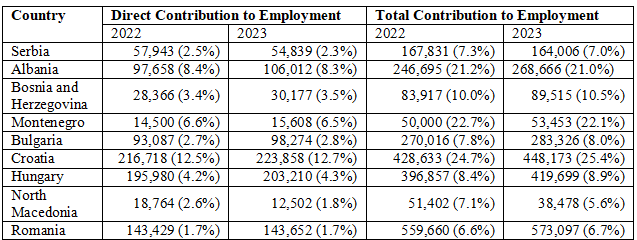
The analysis of direct and total contributions of tourism to employment across the region highlights variations in the sector’s role in job creation, which are closely linked to differing levels of sectoral development and the economic structures of the observed countries.
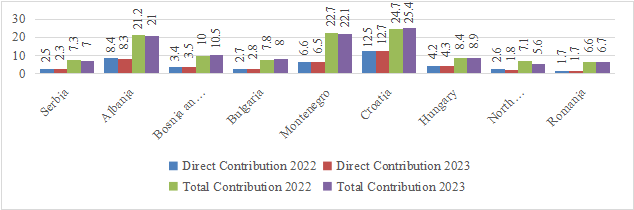
In Serbia, the direct contribution of tourism to employment amounted to 57,943 jobs (2.5%) in 2022, declining slightly to 54,839 (2.3%) in 2023. The total contribution was significantly higher, with 167,831 jobs (7.3%) in 2022 and 164,006 (7.0%) in 2023. These figures indicate a modest decline in absolute employment directly within the tourism sector, yet affirm its stable role as a major employer within the broader tourism-related value chain.
Albania recorded substantial growth in tourism-related employment, with direct employment rising from 97,658 jobs (8.4%) in 2022 to 106,012 (8.3%) in 2023. The total contribution reached an impressive 246,695 jobs (21.2%) in 2022 and further increased to 268,666 (21.0%) in 2023, reflecting the Albanian economy’s strong dependence on tourism as a source of employment - both in service industries and related sectors.
Bosnia and Herzegovina experienced growth in direct tourism employment, increasing from 28,366 jobs (3.4%) in 2022 to 30,177 (3.5%) in 2023. The total contribution rose from 83,917 (10.0%) to 89,515 (10.5%), indicating steady sectoral development and its importance in national job creation.
Bulgaria also recorded growth, with direct employment rising from 93,087 (2.7%) in 2022 to 98,274 (2.8%) in 2023. Total employment contribution increased from 270,016 (7.8%) to 283,326 (8.0%), with seasonal employment along the Black Sea coast playing a particularly significant role in boosting local labor markets.
Montenegro, despite relatively small absolute figures, demonstrates tourism’s substantial role in employment. Direct employment rose slightly from 14,500 jobs (6.6%) in 2022 to 15,608 (6.5%) in 2023. Total employment contribution increased from 50,000 (22.7%) to 53,453 (22.1%), confirming tourism as a key segment of Montenegro’s labor market, especially during peak tourist seasons.
Croatia traditionally stands out as a regional leader in tourism-related employment, with 216,718 jobs (12.5%) directly in tourism in 2022, increasing to 223,858 (12.7%) in 2023. The total contribution was exceptionally high - 428,633 jobs (24.7%) in 2022 and 448,173 (25.4%) in 2023 - indicating that tourism accounts for nearly a quarter of total employment in the country. These figures underscore tourism’s critical role in Croatia’s labor market, particularly in coastal regions.
Hungary shows stable growth in direct tourism employment, rising from 195,980 jobs (4.2%) in 2022 to 203,210 (4.3%) in 2023. Total employment contribution increased from 396,857 (8.4%) to 419,699 (8.9%), reflecting the sector’s progressive strengthening, especially in cultural and conference tourism, with positive effects on the labor market.
North Macedonia experienced a notable decline in tourism-related employment between 2022 and 2023. Direct tourism employment fell from 18,764 jobs (2.6%) to 12,502 jobs (1.8%), while the total employment contribution decreased from 51,402 jobs (7.1%) to 38,478 jobs (5.6%). This development contrasts with the recovery observed in tourist arrivals and the increase in overnight stays in 2023. The divergence between tourism activity and tourism-related employment indicates that changes in employment cannot be explained solely by the volume of tourist flows and may also reflect changes in labor productivity, employment structures, statistical measurement, or other economic factors. Further research would be required to identify the underlying causes of this divergence.
Romania maintained stability in direct tourism employment, with 143,429 jobs (1.7%) in 2022 and 143,652 (1.7%) in 2023. The total contribution was more pronounced, rising modestly from 559,660 (6.6%) to 573,097 (6.7%). These results indicate the sector’s consistency and its relevance for both rural and urban areas, with potential for further development. The estimated contribution of tourism to employment is presented in Graph 4.
Graph 4: Tourism Contribution to Employment (in %) in Serbia and Neighboring Countries, 2022–2023
Source: Authors based on Table 5
The comparative analysis of tourism’s contribution to employment across the region reveals substantial differences in the extent to which national economies rely on this sector as a generator of jobs. While Croatia, Albania, and Montenegro clearly dominate with high shares of employment in tourism, countries such as Serbia, Romania, and Hungary exhibit stability or moderate growth, whereas North Macedonia requires additional attention due to a noticeable decline in sectoral employment. These findings underscore the importance of strategic planning, investment in infrastructure, and the development of human resources to enable tourism to more effectively contribute to both local and national labor markets.
Conclusion
This study provides a comparative assessment of tourism flows and their economic significance in Serbia and selected neighboring and nearby countries in Southeast and Central Europe over the period 2019–2023. Its main scientific contribution lies in the integration of several dimensions of tourism performance—tourist arrivals, overnight stays, international tourism revenues, and the direct and total contributions of tourism to GDP and employment - within a common comparative framework. By combining physical tourism indicators with economic and financial measures, the study provides a broader basis for assessing the relative position of Serbia within the observed regional context.
The results indicate substantial differences in the intensity of tourism development and in the economic dependence on the sector. Serbia recorded growth in both tourist arrivals and overnight stays between 2019 and 2023, while the WTTC estimates indicate considerably higher levels of tourism's relative contribution to GDP and employment in countries such as Croatia, Montenegro, and Albania. The revised data for North Macedonia indicate that the country had largely restored its pre-pandemic level of tourist arrivals by 2023, while overnight stays remained approximately 3.9% below the 2019 level. This finding further illustrates the importance of considering several tourism indicators simultaneously rather than relying on a single measure of sectoral performance.
The analysis also demonstrates that strong tourism growth does not necessarily imply an equivalent increase in the sector's relative contribution to GDP or employment. Differences between direct and total contributions further indicate the importance of tourism-related linkages with other sectors of national economies. At the same time, these indicators should primarily be interpreted as descriptive measures of the economic significance of tourism rather than as evidence of causal relationships. The present study does not employ econometric models capable of identifying the independent effects of infrastructure, tourism policy, prices, political conditions, destination attractiveness, or other explanatory factors.
Several limitations should therefore be acknowledged. First, the study relies predominantly on secondary statistical data obtained from national statistical offices, Eurostat, and the World Travel & Tourism Council. Differences in definitions, coverage, statistical procedures, reference populations, and estimation methods may limit the comparability of indicators across countries. This issue is particularly relevant for Albania, where the arrival indicator used in the comparison refers to entries of Albanian and foreign citizens recorded at national border points and is therefore not fully comparable with accommodation-based tourist-arrival statistics used for the other countries. For this reason, Albania's arrival figures should be interpreted with caution and its overnight-stay data were not included in the comparative table.
Second, the use of aggregate indicators limits the ability of the study to capture qualitative aspects of tourism development, including sustainability, innovation, service quality, seasonality, informal economic activity, and regional differences within countries. Third, the period 2019–2023 is particularly useful for observing the disruption caused by the COVID-19 pandemic and the subsequent recovery, but it is relatively short for identifying long-term structural trends. Finally, the study is descriptive and comparative in nature and therefore cannot establish causal relationships between tourism performance and specific economic, political, infrastructural, or institutional factors.
Despite these limitations, the research provides an empirical comparative baseline for understanding the position of Serbia within the regional tourism system. The findings suggest that Serbia has achieved a relatively strong post-pandemic recovery while maintaining a lower degree of economic dependence on tourism than several highly tourism-oriented economies in the region. Future research could extend the analysis by using longer time series, harmonized tourism indicators, panel-data or econometric methods, and country-level case studies. Such approaches would enable a more precise assessment of the factors that determine differences in tourism competitiveness, resilience, and economic contribution across the region.
References
2.Archer, B. H. (1977). Tourism Multipliers: The State of the Art. Bangor: University of Wales Press.
3.Brida, J. G., Lanzilotta, B., & Pizzolon, F. (2016). Dynamic relationship between tourism and economic growth in MERCOSUR countries: A nonlinear approach based on asymmetric time series models. Economics Bulletin, 36(2), 879-894.
4.Burlea‑Schiopoiu, A., & Ozuni, F. (2021). The potential of Albanian tourism sector. Sustainability, 13(7), 3928. https://doi.org/10.3390/su13073928
5.Čerović, S., Knežević, M., Matović, V., & Brdar, I. (2015). The contribution of tourism industry on the GDP of Western Balkan countries. Industrija, 43(3), 159-170. https://doi.org/10.5937/industrija43-9002
6.Csapó, J., & Marton, G. (2017). The role of spas and wellness tourism in Hungary’s tourism industry. Czech Journal of Tourism, 6(1), 55-68. DOI: 10.1515/cjot-2017-0003
7.Државен завод за статистика (2025). Статистичко истражување за туристи и ноќевања. Available at: https://www.stat.gov.mk/meta/esms/ESMS_TU11_M_MK.pdf
8.Dwyer, L., Forsyth, P., & Spurr, R. (2003). Inter-industry effects of tourism growth: Implications for destination managers. Tourism Economics, 9(2), 117–132. https://doi.org/10.5367/000000003101298303
9.Eurostat (2025). Area by NUTS 3 region. Available at: https://ec.europa.eu/eurostat/databrowser/view/demo_r_d3area/default/table?lang=en, https://doi.org/10.2908/DEMO_R_D3AREA
10.Eurostat (2025). Employment and activity by sex and age - annual data. Available at: https://ec.europa.eu/eurostat/databrowser/view/lfsi_emp_a/default/table?lang=en, https://doi.org/10.2908/LFSI_EMP_A
11.Eurostat (2025). Gross domestic product (GDP) and main components (output, expenditure and income). Available at: https://ec.europa.eu/eurostat/databrowser/view/nama_10_gdp/default/table?lang=en&category=na10.nama10.nama_10_ma, https://doi.org/10.2908/NAMA_10_GDP
12.Eurostat (2025). Gross domestic product (GDP) and main components per capita. Available at: https://ec.europa.eu/eurostat/databrowser/view/nama_10_pc/default/table?lang=en&category=na10.nama10.nama_10_ma, https://doi.org/10.2908/NAMA_10_PC
13.Eurostat (2025). Population density by NUTS 3 region. Available at: https://ec.europa.eu/eurostat/databrowser/view/demo_r_d3dens/default/table?lang=en, https://doi.org/10.2908/DEMO_R_D3DENS
14.Eurostat (2025). Population on 1 January by age and sex. Available at: https://ec.europa.eu/eurostat/databrowser/view/demo_pjan/default/table?lang=en, https://doi.org/10.2908/DEMO_PJAN
15.Federalni zavod za statistiku Bosne i Hercegovine (2024). Statistički godišnjak/ljetopis Federacije Bosne i Hercegovine. Sarajevo: Federalni zavod za statistiku Bosne i Hercegovine.
16.Fletcher, J. E. (1989). Input-output analysis and tourism impact studies. In C. P. Cooper (Ed.), Progress in Tourism, Recreation and Hospitality Management (Vol. 1, pp. 28-35). London: Belhaven Press.
17.Giotis, G. (2022). Preliminary results on the employment effect of tourism. A meta-analysis. ArXiv, 1-18. https://doi.org/10.48550/arXiv.2206.00174
18.Government of Romania (2024). National Strategy for Tourism Development 2025–2035. Available at: https://accessible-eu-centre.ec.europa.eu/content-corner/digital-library/strategia-nationala-din-25-septembrie-2024-pentru-dezvoltarea-turismului-pentru-perioada-2025-2035_en?prefLang=el
19.Hall, D. R. (1998). Tourism development and sustainability issues in Central and South-eastern Europe. Tourism Management, 19(5), 423–431. https://doi.org/10.1016/S0261-5177(98)00039-9
20.INSTAT (2022). Tourism in Figures – Albania 2021. Available at: https://www.instat.gov.al/media/11112/tourism-in-figures-albania-2021.pdf
21.INSTAT (2025). Arrived/Departure of Albanian and Forign passangers by Means of Transport, Citizenship, Arrived/Departure, Type and Year. Available at: https://databaza.instat.gov.al:8083/pxweb/en/DST/START__TU__TU1/TU0001/table/tableViewLayout1/
22.Ivanov, S. H. & Webster, C. (2013). Tourism’s contribution to economic growth: A global analysis for the first decade of the millennium. Tourism Economics, 19(3), 477-508. https://doi.org/10.5367/te.2013.0211
23.Jankovic, M., Lubric, V., & Sofranac, R. (2017). Sustainable tourism as a basis of management of national parks in Montenegro. Ekonomika, 63(4), 41-51. https://doi.org/10.22004/ag.econ.290342
24.Mihalič, T. (2000). Environmental management of a tourist destination: A factor of tourism competitiveness. Tourism Management, 21(1), 65-78. https://doi.org/10.1016/S0261-5177(99)00096-5
25.Monstat (2024). Poglavlje 19 - Turizam/Chapter 19 – Tourism. Available at: https://monstat.org/uploads/files/publikacije/godisnjak2024/19.pdf
26.Nacional Statistical Institute (2025). GDP at Market Prices per inhabitant in Euro. Available at: https://www.nsi.bg/en/statistical-data/108/357
27.Novović, M., & Lukić, A. (2025). Uticaj turističkih tokova na makroekonomske pokazatelje Srbije i Bosne i Hercegovine – komparativna analiza. U Ž. Petrić & C. Živanović (Ur.) ISCELT 2025: Prva međunarodna naučna konferencija - ekonomija, pravo i tehnologije (zbornik radova, str. 133-144). Univerzitet “Privredna akademija” Brčko distrikt BiH, Primaprom, Banja Luka.
28.Palazov, A., & Stanchev, H. (2007). Tourist industry growth pressure along the Bulgarian Black Sea Coast. Rapports et Communications – International Commission for the Scientific Exploration of the Mediterranean Sea (CIESM), 38, 696.
29.Republički zavod za statistiku (2024a). Statistički godišnjak Republike Srbije 2024. Beograd: Republički zavod za statistiku.
30.Republički zavod za statistiku (2024b). Statistički godišnjak Republike Srpske 2024. Banja Luka: Republički zavod za statistiku.
31.Ružić, P., & Demonja, D. (2013). Prirodna i antropogena osnova turizma Hrvatske. Sociology and Space, 51(1), 45-65. https://doi.org/10.5673/sip.51.1.3
32.Selimi, N., Sadiku, L., & Sadiku, M. (2017). The impact of tourism on economic growth in the Western Balkan countries: An empirical analysis. International Journal of Business and Economic Sciences Applied Research (IJBESAR), 10(2), 19-25. DOI: 10.25103/ijbesar.102.02
33.Štetić, S., Trišić, I., & Nedelcu, A. (2019). Natural potentials of significance for the sustainable tourism development – The focus on the special nature reserve. Journal of the Geographical Institute “Jovan Cvijić”, 69(3), 279-283. https://doi.org/10.2298/IJGI1903279S
34.Temjanovski, R., Lazarov, D., Miteva-Kacarski, E., Paceskoski, V. & Arsova, M. (2018). Transport infrastructure as well as a generic resource to boosting the economic growth of the Republic of Macedonia. UGD Academic Repository. Available at: https://eprints.ugd.edu.mk/21367/1/Temjanovski%20B%2006%2050%20%282%29.pdf
35.Travel & Tourism Economic Impact Research (EIR). Available at: https://wttc.org/research/economic-impact
36.Ubavić, P. (2016). Pozicioniranje Srbije kao turističke destinacije na međunarodnom turističkom tržištu. Megatrend revija, 13(2), 97-118. DOI: 10.5937/MegRev1602097U
37.Vuković, D. B., Maiti, M., & Petrović, M. D. (2023). Tourism employment and economic growth: A dynamic panel threshold analysis. Mathematics, 11(5), 1112. https://doi.org/10.3390/math11051112
38.World Tourism Organization (2024). International tourism highlights, 2024 edition, November 2024, UN Tourism, Madrid. https://doi.org/10.18111/9789284425808
39.World Travel & Tourism Council (2023). Travel & tourism economic impact – Serbia, Albania, Bosnia and Herzegovina, Bulgaria, Croatia, Hungary, Montenegro, North Macedonia and Romania.
40.World Travel & Tourism Council (2024). Travel & tourism economic impact – Serbia, Albania, Bosnia and Herzegovina, Bulgaria, Croatia, Hungary, Montenegro, North Macedonia and Romania.
Published in
Vol. 32 No. 2 (2026)
Keywords
Licence
This work is published under the Creative Commons Attribution 4.0 International (CC BY 4.0).
Authors retain copyright over their work.
Use, distribution, and adaptation of the work, including commercial use, is permitted with clear attribution to the original author and source.
Interested in Similar Research?
Browse All Articles and Journals