
Role and Application of Information Communication Technologies: Significance of Social Networks in the Placement of Hotel Capacities in Serbia
Abstract
Distribution and promotion and ultimately the sale of hotel accommodation units and services is increasingly taking place through various social media. A complete profile on social media should represent an integral presentation of a specific destination or hotel company, it should offer adequate information and provide answers to every question that a potential tourist may ask regarding the destination, contents, and other elements of the tourist offer. The presented research aimed to analyze the indicators of the influence of digital media and and use of operational internet marketing in general to see the effects on the business success of high-category hotels. This was a challenge that arose during the research process because hotels in Serbia are slower to adapt to the trend of applying social networks in the business practice of hotels. In particular, the marketing aspects of the application of social networks in increasing the profitability of hotel companies in Serbia are considered.
To see to what extent this approach, for achieving competitive advantage, as an entrepreneurial philosophy orientation is present in hotels of the highest category in Serbia, we conducted primary research in selected hotels with four and five stars.
Article
Introduction
The Internet and social networks are powerful instruments that provide numerous opportunities for organizations. Tourism, in particular, benefited from the ease generated by the removal of obstacles, international transportation network, and technology advancements (Cunha et al., 2021). The use of cutting-edge technology is the most dynamic factor in the tourism and hotel industris' efficiency and effectiveness. The technological improvements experienced with the rise of the internet and social media had an influence on how information was transmitted, with the internet being the most frequent mode of information search (Xiang & Gretzel, 2010).
These widespread channels have a significant impact on the tourism industry as a whole, and the hotel business in particular. Because of their inherent nature, and since they sell services which are intangible and diverse, communication is a critical component of the tourist offer (Chen & Wu, 2019). ICT has an important role in stimulating economic growth, especially by developing new competitiveness in tourist management destinations and organizations (Fernandez et al., 2020). Technological advancement and globalization are interrelated processes, and a succession of innovations in the development of ICT become available to all legal entities in the hotel business with the means to acquire them, as well as qualified staff. The benefits of ICT use in the hotel sector range from improved communication between the hospitality industry and its customers to lower operating expenses for organizations (Yorkulov et al., 2022). The same authors add that using the Internet in marketing activities rather than printed material is more effective when it comes to promoting hotel services (Yorkulov et al., 2022). It has brought a fresh perspective on communications and commerce in the business sectors, both in terms of the number of users and the approach in which products are promoted and sold (Infante-Moro et al., 2015). The volume social network users, as well as the percentage of those who use these platforms on a daily basis, is steadily increasing. In the past several decades, new marketing technologies, like as social networks, developed as a new method for hospitality organizations and users to communicate (Abdallah-Alalwan et al., 2017). Customer satisfaction is highly reliant on the quality and availability of specific information, as well as the ability and rapidity with which companies respond to their needs.
Modern technology, on the one hand, and improved promotional strategies, on the other, provide substantial prospects for enhancing communications, particularly in terms of target group coverage, as well as influencing the attitudes of individual guests within the framework of the target group. Hotel companies have developed the capacity to give personalized services (Kumar et al., 2022). IT stimulates activities and assists in the creation of dynamic innovation capabilities in the process of knowledge generation, production, and distribution (Srivastava & Joshi, 2018). Very adaptive hotel organizations immediately recognized and accepted the multiple opportunities provided by Internet use, and have increased its use in the complicated activities of their business. Guests nowadays put pressure on hospitality managers to offer smart and innovative services and to improve service efficiency, which makes it vital for hospitality service decision- makers to confront service redesigning in both operational and strategic management by implementing ICT. (Sardar et al., 2021). Tourists may communicate with their virtual and actual surroundings concurrently in this setting, sharing recommendations, thoughts, critiques, doubts, and recollections about their experiences (Fan et al, 2019).The hotel business has changed radically with the advent of the Internet, and human resources in hotels are quickly adapting to the application of new technologies, especially social networks. The finest digital marketing approach in this sector is based on knowing the current tourist profile and how he utilizes digital technologies, since he has a set of distinct habits and features (Veiga et al., 2017).The company innovation approach has a significant influence on overall organisational effectiveness, which gives a competitive advantage in the hotel market (Farooq et al., 2021). The hotel attempts to establish a positive image and impression for potential guests through its website and social network's profiles. For example, reserving accommodation via the internet is a widespread activity, and hotels continue to engage in this sort of room capacity selling since it is regarded as extremely efficient. Offering excellent online tools for communicating with customers reinforces the good experience, increasing their excitement for the company and its goods or services in order to enhance sales growth. Hotels can create an international online communities through customers as fans and information sharers, as well as strengthen the social network through its active presence in the site by providing information, addressing questions, and responding to comments, by using social networking sites with the most users (Hsu, 2012).
Major hotel companies acknowledge the value of social media in today's environment. Given the limited number of hotels under the control of global hotel enterprises in the Serbian market (Barjaktarović & Mašić, 2014), it is more difficult to provide technological expertise and knowledge to smaller hotel businesses.The hotel sector in Serbia is distinguished by a variety of characteristics and specificities, including the yet insufficient use of digital media as an integral part of the hotel business. The reasons can be numerous and specific for each hotel individually, but the general ones are as follows: (1) insufficient and inadequate promotion of the application of these media in the hotel industry, (2) undeveloped and inadequate environment for the accelerated development of the information society, (3) insufficient and inadequate education of human resources in the hotel industry; and (4) insufficient and poor acceptance of the importance and importance of the application of digital media in business, by owners and managers at all levels; In the context of the research objective, it should not be ignored, apart from the impact of ICT, that the pandemic that "ravaged" in the period 2020-2022 also affected the competitive position and the achievement of advantages in the tourism market. There is a transformation of travel and business forecasting in tourism under extremely difficult circumstances, during and after the Covid-19 phase.
The paper's structure covers the initial considerations acquired from the literature analysis in relation to general marketing concepts and the formulation of marketing strategies with the aim of achieving a more competitive market position. Furthermore, the general considerations of these principles are accompanied by the specific role of ICT in achieving competitive advantage, so that the empirical part of the work deals with the individual use of ICT and distribution systems in the sale of hotel services by hotel companies in Serbia with 4 and 5 stars. Before that, the second chapter outlines the methodology used throughout the study planning, implementation, and analysis. The most significant findings from the empirical study were presented and discussed, and conclusions were reached in the final section of the paper.
The paper establishes the following hypotheses, which should be proved or disputed by empirical research.
The basic, initial hypothesis is to determine to what extent (quantitatively and qualitatively) the application of modern information and communication technologies can influence increased competition in the hotel market, i.e. raising the level of the hotel's competitive advantage, particularly in terms of the use of social networks by hotel management and hotel guests. From the standpoint of quality, as the foundation of competitive advantage in the hotel sector, and as a strategic alternative, it is regarded as one of the four hypotheses that should have been validated throughout the research.
Additional hypothesis: Competitive advantage is an important functional strategy that is included in the function of quality management, inside the company, as a result of using social networks. The use of social networks is a significant aspect and process in the successful management of the competitive position in the increasingly complicated tourism sector, with the aim of increasing guest satisfaction and profitability as a result.
Second Additional Hypothesis: The competitive advantage attained in this manner, through the use of an effective social network model, can be an independent strategy of market segmentation and differentiation, with a particular emphasis on all levels of quality, with the goal of evaluating and reviewing the guest's perception of the hotel company, as well as product quality and service, in order to achieve a level of offer that ensures a higher differentiated value;
Auxiliary hypothesis: The hotel company applies social networks to achieve one of the major strategic adjustments, referring to a specific option of the differentiation strategy in order to achieve a growing level of quality, which enhances the level of competitiveness.
Second auxiliary hypothesis: From the perspective of hotel management, the utilization of social networks should be viewed as part of the organizational culture, as an integrated component of the strategy, with the goal of achieving a stronger competitive position. The use of social networks is one aspect of responsible individuals' involvement in the sphere of human resources, in the operation of hotels in attractive residential tourism sites in Belgrade and Serbia. The basic effort is focused on providing the highest possible level of quality in hotel products and services, as well as increasing hotel guest satisfaction, in order to achieve the end result, which is a better competitive position of highly categorized hotels in relation to increasingly demanding tourists and market turbulence caused by economic and non-economic factors.
In addition to the primary hypotheses, additional (secondary) hypotheses were established at the outset of the research, which will be attempted to be verified, that is, described as one of the starting points of the entire research process:
Secondary hypotheses:
(1) The good performance of the hotel, in the specific destination, is not a static category, but should be tried to be further improved through a real, well-measured, process of using social networks;
(1) Whether and to what extent social media enable hotels to apply new marketing strategies and access the global tourist market.
(2) Whether and to what extent social media enable potential guests to, using the website, provide timely information about the specific hotel offer, see the price-quality ratio of hotel services, as well as make a reservation of accommodation and a set of services.
(3) To what extent does greater availability of information and a new way of communication enables consumers-guests to participate in the development of the reputation of the destination, and the hotels there.
(4) How internet marketing has changed the classic ways of doing business and is used as a communication and distribution system (which works in a fairly simple way);
(5) To what extent the new access to the Internet has led to the application of new trends in the way intermediaries work and how did they affect the key success factors of intermediaries in the future;
(6) ICT contributes to flexibility and innovation in providing additional value to the tourist product and service;
Material and methods
The main goal of the research is to confirm the influence of social networks on the promotion and increase of placements and reservations of hotel capacities, thereby increasing representation on the market, market participation, and raising the competitive position to a higher level. In general, in this way, the business performance of every hotel that uses, with greater intensity, various social networks for promotional purposes, as well as for booking and placement of hotel accommodation units and services, is improved.
The research was carried out using a survey and interviews, with a total of 110 hotels examined (11 with 5 stars and 99 with 4 stars) between July and December 2021 and 2022. The study began with an axiom, which is a forecast about the future of digital marketing, namely that more and more business would be conducted on electronic marketplaces. As a result of entrepreneurs, managers, and owners implementing efficient and more successful digital marketing in their businesses, as well as ongoing assessment and continuous development of the specific marketing process, there is a proactive reaction to complicated events in the tourist market. The well-founded structure of the study and the stated hypotheses conditioned the corresponding specific research methodologies, which are particularly relevant to social networks. The appropriate utilization of social media may contribute to the enhancement of brand recognition and image. (Godey et al., 2016) and even larger economic results (Kim & Chae, 2018). The research used methodology and well-known techniques in obtaining and processing data: survey, interview, statistical methods, and content analysis of primary and secondary sources. However, the formed sample could not be fully representative, despite the intention to include hotels of higher categories, in order to present as realistically as possible the use of social networks with effects on the competitive position, on that basis, in Serbian hotels. The reasons for this are multiple and some of them are as follows:
(1) a large number of hotels in Serbia operate as part of complex business systems, which, in addition to the hotel business, also perform other activities,
(2) business continuity was not achieved during the observed period (2020-2022);
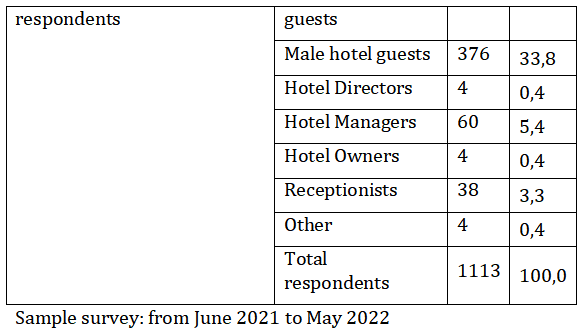
In total, there were three categories of respondents (Table 1), including:
a) General managers, Hotel managers, Managers’ assistants, and sector directors
b) Operational managers and department leaders
c) Hotel guests (both 4 and 5 stars hotels) Table 1 Structure of the respondents

In the sample used (110 hotels and about 1000 respondents; research conducted in 2021 and 2022), some of the hotels are Hyatt Regency, Metropol Palace, Saint ten hotel, Square Nine (5- star hotels), Hotel 88 Rooms, ABBA hotel, Admiral Arena Garni hotel, Allure Caramel Hotel by Karisma, Hotel Amsterdam, Belgrade Art hotel, Garni Hotel „B Hotels“, Hotel Belgrade City, Capital Garni Hotel, Garni Hotel Centar No 1, City Code Vizura Garni Hotel, Hotel Constantine the Great, Hotel Courtyard by Marriot Belgrade City Center, Crowne Plaza Belgrade, Crystal Hotel Garni, Garni Hotel D10, Envoy Hotel, Evropa Garni Hotel, Euro Garni Hotel, Mercure Excelsior Beograd, Falkensteiner Belgrade, Garden Hotel Srbija, Helvetia Garni Hotel, Heritage Hotel Garni, Hotel Hilton Belgrade, Holiday Inn Beograd (4-star hotels) (MTO, 2023). Of the other hotels, the sample also included hotels from central Serbia, such as „Mona hotel“ Zlatibor, „Izvor“ or „Merkur“ Vrnjačka Banja, „Izvor“ Aranđelovac and some hotels from Kopaonik, Novi Sad or Subotica, all of which depended on the availability of data, i.e. the willingness of the human resources managers in those hotels to be cooperative and appreciate the goals of the research. The primary research data were examined utilizing univariate, bivariate, and multivariate statistical analysis approaches. The descriptive statistical analysis approach was used to determine the fundamental socio-demographic characteristics of the respondents - Bivariate statistical analysis methods were applied to see if there are any significant differences between the group of respondents who made their last online reservation through a hotel website and those who booked it through an online travel agency. The partial least squares approach was utilized to test the set research hypotheses and empirically evaluate the conceptual model. One of the target groups or the sample used for this research were people who booked accommodation online through an OTA or a hotel website in the last 12 months. However, considering that there is no list of Internet users, it was not possible to use a random sample in this research (Tabs, 2012, str.79).Therefore, the researchers used a deliberate opportunity sample, but to reach a larger number of respondents, a "snowball sample" was also used, among others, so the contacted respondents were asked to forward some copies of the questionnaire to their friends and acquaintances, hotel guests with who were not contacted directly (Filipić, 2019, str.1-9). Hotels in Serbia, especially those with 4 and 5 stars, provide links to social networks: Facebook, Twitter, Linkedin, YouTube, and Instagram.
The survey questionnaire consisted of three parts, within which respondents were asked 15 questions.
Expected effects of using ICT-social networks
Different forms of digital media that, when combined, may serve as an outstanding communication tool for domestic hotels in connection to current and prospective customers. According to scientific and professional circles, a more widespread use of digital media in the Serbian hotel sector would result in a very beneficial economic position in the following domains:
(1) improved connection with potential consumers of hotel products and services;
(2) improved promotion of the integrated hotel offer and overall capacity in lodging and food;
(3) a quantitative movement in the number of users, both domestic and foreign visitors, lodging, and consumption;
The research also deals specifically with the position of tourist intermediaries - tour operators and travel agencies, in an era when their classic position as intermediaries between tourist supply and tourist demand is being questioned. hypothesize that, precisely because of digital tools, CRM, and the use of new technology, the strategic position of tourism entities (such as tour operators and travel agencies) is changing significantly, and they, moreover, are becoming co-creators of the tourist offer from the position of a classic intermediary. New trends in tourism affect the increase in profitability in the hotel industry and the level and quality of satisfaction of tourists staying in a hotel at a certain destination. New trends can be seen in eight categories (Stojković, M., 2018), namely: 1. virtual tours, 2. personalization, 3. Instagram stories, 4. e-mail marketing automation, 5. content marketing, 6. direct bookings, 7. dynamic remarketing, and 8. platforms for chatting with tourists9; The use of IT technologies in the hotel industry resulted in the creation of a large number of communication channels, so today, because of the Internet, it is possible to publish information on websites, exchange messages via e-mail, and publish various multimedia content on social networks, blogs, and the like. Hotels take use of these chances to grow their company and increase profitability. According to data from the MTO (2023) , in 2021, 16 five-star hotels and over 110 four-star hotels were operating in Serbia.
The announcement, as a specific sort of text, published on a social network, offers a distinctive technique of molding material that is shared by a large number of people. This means that, as a medium of communication within social networks, the text constitutes a totality with a communicative purpose and meaning (De Beugrande i Dessler, 2018). This means that the conventional interpretation, which holds that the text is only in written form, would miss several contemporary events, such as social network postings, and the complete communication route, such as a specific social network.
Almost all of the investigated hotels have social networks, which have become a component of routine business communication. Hotels are frequently exposed to new types of social networks, but just a handful of them are extremely popular among users or potential hotel guests. You should not be influenced solely by the number of presently active monthly users when selecting a social network for hotel business promotion. Their principal function, the characteristics of the average user of a specific social network, whether that platform is appropriate for the hotel brand, and the number of social networks on which one may maintain an active profile are all essential considerations.
9 Stojković, M., 2018, Internet marketing trendovi u turizmu, www.milanstojkovic.com
Statistical presentation of the research
The research's first and most fundamental component focused on the success of the hotel business in collaboration and dependency on global distribution systems and social networks, using a sample of hotels as an example. An essential aspect of the research was the degree, extent, and quality of representation of online distribution systems in the placement of hotel capabilities and services, as well as collaboration with hotel firms in Serbia in the stated category. An essential aspect of the research was the representation of online distribution methods in the sale of hotel services, as well as collaboration with other subjects in the tourist market. Then, the representation of the portal booking.com internet social systems in booking accommodation and consequently increasing the income and raising the level of profitability of specific hotels was investigated. The concluding part of the research was related to the systematization of the attitudes of tourists who stayed in the analyzed 4- and 5-star hotels in Serbia. From the spatial dispersion of hotels in these categories, the largest number are located in large cities: Belgrade, Novi Sad, and Niš, a total of 86%, while the rest of the hotels are located in mountain centers where Zlatibor, Kopaonik, and Stara Planina are the leaders, and in spas dominated by Vrnjačka Banja, Sokobanja and spas in Vojvodina.
The guests highlight certain features of the hotel, namely: modernly equipped rooms and a high level of service quality;
1. quality of interaction between employees and guests,
2. volume and intensity of positive and negative comments;
Bivariate statistical analysis methods were applied to determine whether there were any significant differences between individuals who made their last online reservation through a hotel website and those who booked it through an online travel agency. Structured equation modeling with the partial least squares technique (PLS- SEM) was used to examine the established research hypotheses and empirically evaluate the conceptual model. The Statistical Package for Social Science SPSS 23.0 and the statistical application SmartPLS 3.2.9 were used to process some of the acquired data.
Practice of application of social networks in the promotion of 4- and 5-star hotel offers in Serbia during 2021 is presented in Table 2.
Table 2 Application of social networks in the promotion of 4- and 5- star hotel offers in Serbia in 2021, results of descriptive statistical analysis
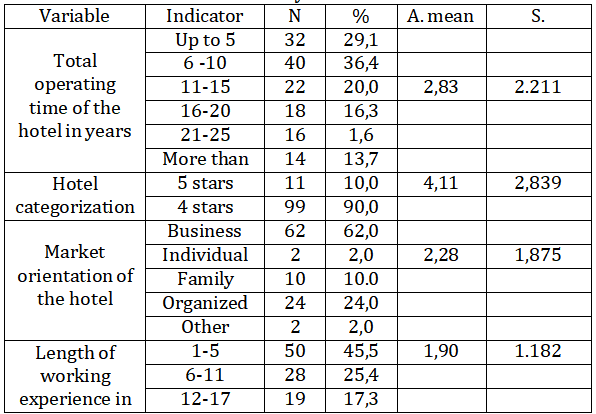

In this analysis only hotels’ owners and employees are considered. Based on the analysis, most of the respondents were hotel managers, while most of the hotels from which the respondents were are 4-star hotels. If we look at the most typical respondent, it is the manager of a 4-star business hotel with 1-5 years of experience in the hotel sector and a hotel that is 6-10 years old. This analysis of hotel sector respondents is significant for the reason that it allows everyone to just better understand their work experiences as well as the target market that their hotel companies interact with the most and on the basis of which they choose techniques and approaches to communicate with them. Based on their knowledge and proficiency in the use of ICT, they can influence the improvement of hotel operations and thus the profitability of the hotel.
Based on several definitions and well-known classifications, hotel managers can recognize several social media that have a significant impact as a product of the use of modern information and communication technologies that are important for significantly improving hotel operations, namely (Živković., Njeguš., Gajić, Brdar, & Mijajlović, 2015, str.133-139):
• cooperative projects (the user can add, remove, and change text- based content); • virtual forums (places where information, content (text, sound, video) and opinions (praise and criticism of a certain topic (Tripadvisor, Virtual Tourist, etc) can be exchanged and diaries (personal blogs containing travel diaries);
• content communities (on these websites users can share media content such as texts, videos, photos, etc. (Bookcrossing, Youtube, Flickr, Pinterest, Instagram) • social networking sites (websites that allow people to create profiles with personal data, share content with friends and colleagues (Facebook, Linkedin, etc.);
• virtual games/social world (platforms of virtual worlds where people can appear as avatars in interaction with other users (eg, online games for Microsoft X-box or Sony Playstation and sites like Second Life);
Table 3 Application of social networks in the promotion of hotel offers in Serbia; Analysis of Promotion Update Responses
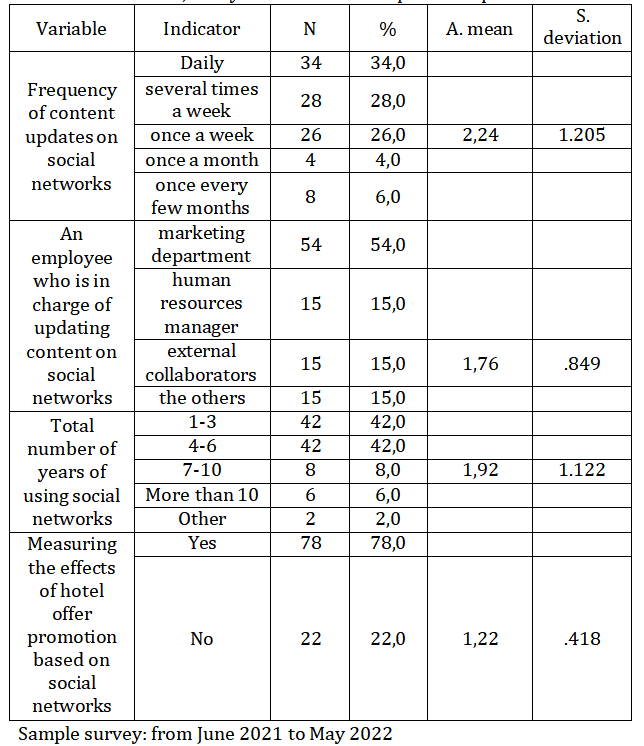
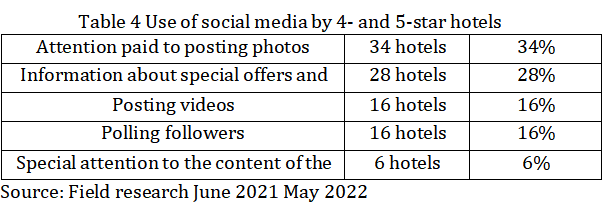
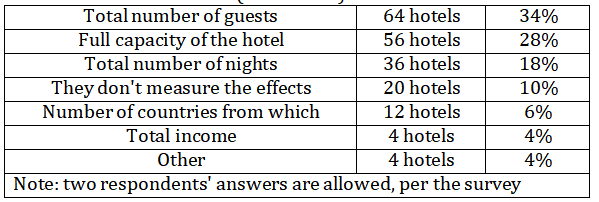
Monitoring the impacts of hotel advertising through social networks, i.e. as a result of the study on the influence of information and communication technologies on increasing the business of 4- and 5-star hotels in Serbia, the results are as follows, as presented in the Table 5
Table 5 Indicators of the success of promotion on social networks (2021-2022)
According to the market segment, 76 hotels (75%) are designed for business people, while 25 facilities are focused on addressing the demands of organized travel and group visitors. Hotel managers, particularly human resources managers, filled out the most surveys, followed by managers of special organizational units (a total of 55 respondents or 50%), receptionists (30 respondents), and other hotel workers (referees with 25 from the questionnaire). In terms of work experience, the questionnaires were largely filled out by personnel working in hotels for 1 to 5 years (55 or 50% of the total). From the perspective of the category, 99 4-star hotels and 11 5-star hotels in the territory of the Republic of Serbia were included in the survey.
Table 5 Basic advantages of hotel cooperation with IDS sample of 96 hotel managers and hotel employees and owners
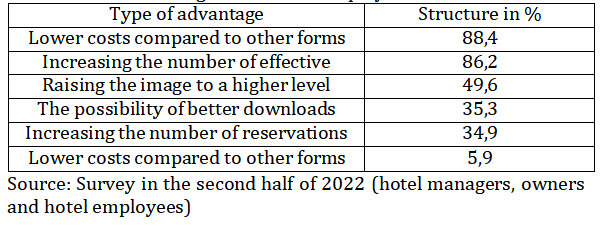
In addition to the obvious benefits of collaborating with 4- and 5- star hotels in Serbia, where productivity and profitability are observed, which is the main goal of business, as well as increasing the level of satisfaction of hotel guests, responsible individuals and managers bring to light a number of shortcomings.
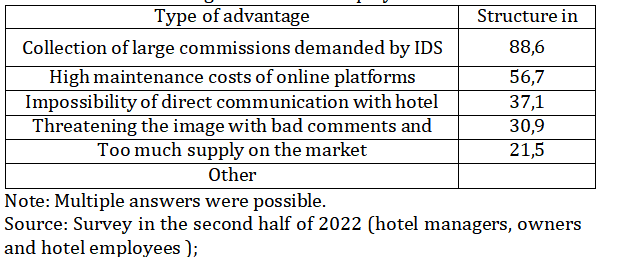
Table 6 Basic shortcomings of hotel cooperation with IDS/sample of 96 hotel managers and hotel employees and owners
In the complex conditions of the hotel business, using social networks, influencers, and blogs have a great influence on people, and potential tourists, and they consider them as a source of reliable information that they trust, all this was helped by the increased use of social networks, but also by people's distrust in advertising activities or campaigns. Tourist destinations cooperate with influencers in various ways, offering them free accommodation, food, and various activities, all to receive an article or photo promoting them in return. There is an increasing number of new trends in the field of tourism, such as mobile marketing - advertising using mobile applications, including the use of people to promote the destination, since more and more people rely on reviews, ratings, experiences, and opinions of previous visitors precisely because they consider them a more reliable source than traditional ones.
The data collected from the surveys collected from the hotels in the sample were analyzed in more detail. A more detailed analysis of the data was carried out using the SPSS statistical package. The results of descriptive statistics and Cronbach's alpha are shown in the following table where the respondents gave the highest marks to (1) reception service during check-in and check-out (4.26), (2) hotel room (4.23), and (3) hotel staff (4.07). The arithmetic mean of all latent variables in the model ranges from 3.55 to 4.27, with a standard deviation from 0.67 to 1.08 in the given period.
Table 7 Value of Cronbach's alpha coefficient, arithmetic mean, and standard deviation
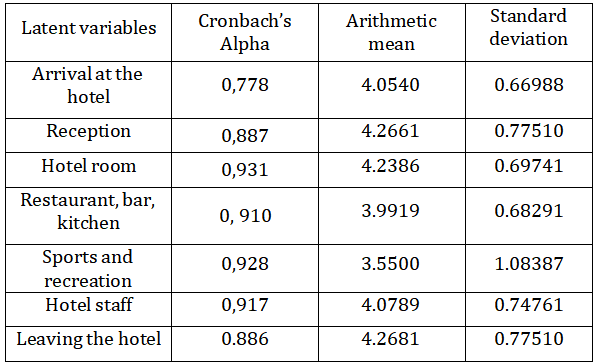
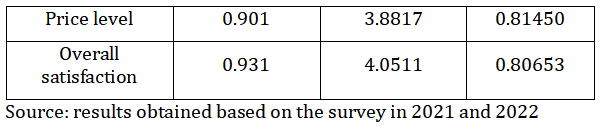
Unlike other claims, attitudes and assertions such as reliability and consistency were measured using Cronbach's alpha coefficient. Cronbach's alpha coefficient values vary from 0 to 1, with values greater than 0.7 indicating appropriate reliability and consistency of the assertions.
Results and discussion
Foreign tourists' satisfaction with the tourism offer in Serbia varied, as measured by as many as 34 factors, including the overall perception of the entire stay. Each factor is evaluated from 1 (disappointing) to 5 (excellent). Foreign visitors who stayed in Serbia in 2021 were exceptionally delighted with their overall stay, as 93% of them assessed their overall stay as "excellent" or "very good".
The highest-rated elements, those for which more than 90% of the ratings were "excellent" or "very good," were personal safety (95%), the hospitality of local people (94%), atmosphere (92%) and gastronomic offer (91%) on the destinations, profitability (91%), the beauty of nature and landscape (91%) and accommodation facilities (90%), both in terms of comfort and service quality.
The elements with which foreign tourists were least satisfied are those related to:
• the richness of the tourist offer at the destination (offer of excursions in the area, quality of health services, offer that is suitable for children), quality of information at destinations (available information, quality of tourist signs, quality of services of local guides, knowledge of foreign languages among the local population),
• transport problems (traffic accessibility of the destination, local public transport, the destination is not suitable for pedestrians, footpaths, cycling routes and paths, the quality of the offer along the roads, the destination is not adapted for people with special needs) and the overall maintenance of the destination (cleanliness of the place, ecological preservation places).
As a consequence of the high level of satisfaction of foreign tourists with the tourist offer in Serbia in 2021, it was also reported that they are highly likely to recommend Serbia as a tourist destination to friends, relatives, and colleagues.
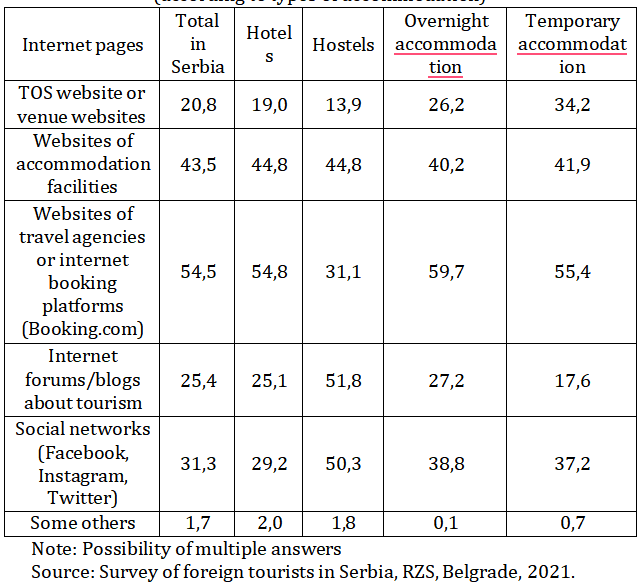
Table 8 Internet as a source of information for foreign tourists (according to types of accommodation)
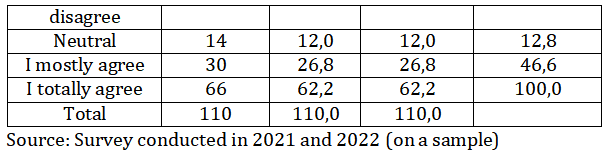
Research on the level of competitiveness of individual hotels can be expressed quantitatively (accommodation capacity occupancy, growth in demand, increase in traffic, etc.) or qualitatively, i.e. descriptively, where potential or loyal hotel guests express their views on the quality of hotel products and services. Each hotel guest can have his own opinion, which is expressed through the ranking. The following table refers to the ranking of the position offered, which was presented to responsible persons in 4- and 5- star hotels in Serbia (a sample of a total of 110 hotels). The question was: Do information and communication technologies strengthen the competitive position in the tourist and hotel market?
The concluding part of the research was related to the systematization of the attitudes of tourists who stayed in the analyzed 4- and 5-star hotels in Serbia. From the spatial dispersion of hotels in these categories, the largest number are located in large cities: Belgrade, Novi Sad, and Niš, a total of 86%, while the rest of the hotels are located in mountain centers where Zlatibor, Kopaonik, and Stara Planina are the leaders, and in spas dominated by Vrnjačka Banja, Sokobanja and spas in Vojvodina. For example, in Niš, in addition to the 5-star "Ambassador" hotel, there are also three 4-star hotels. Structured questionnaires with numerous questions were delivered, mostly to hotel managers (less often to receptionists) via e-mail, while some surveys were completed on- site. Numerous indicators, not only quantitative but predominantly qualitative, were collected based on interviews that were conducted mainly with human resources managers but also with other responsible persons in the hotel. The most effective way to survey hotel guests was direct contact that took place at the reception desks of selected hotels.
Table 9 The impact of information and communication technologies on the level of competitiveness

In a survey conducted on social networks, managers and other responsible persons in 4- and 5-star hotels in Serbia apostrophized several advantages of social networks for the achieved cooperation with global distribution networks (IDS), but also pointed out some disadvantages, most notably high margins (compensations) paid to them for those services.
Table 10 Great advantages of cooperation of 4⃰ and 5⃰ hotels in Serbia with IDS
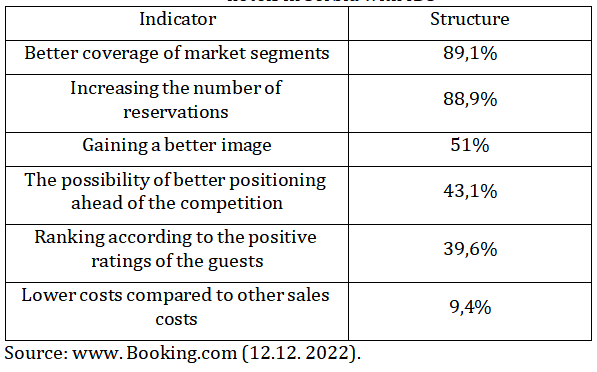
Hotels choose to have a more intense presence on various social networks to be better and more complete in as many parts of the tourist market as possible. As a consequence, this activity achieves the primary aim of increasing the quantity and dynamics of hotel lodging bookings. The second aim, which is only in third place of importance, is the acquisition and preservation of a greater degree of image or recognition of the specific hotel in the turbulent tourism market. The second advantage of such hotels that make extensive use of social networks is a desirable ranking based on hotel guests' evaluations, which they put down on various social networks as an impression of their stay in a particular hotel. Finally, the management feels that the hotel's presence on social networks enables the hotel to have cheaper business expenses compared to the previous time, on the one hand, and compared to rivals at the destination, on the other.
Given the various difficulties in the hotel business, most of which are external, managers of 4- and 5-star hotels should review the success of their hotel's business regularly, because understanding the online behavior of tourists is especially important for all hoteliers who strive to improve the occupancy rate of accommodation facilities. Recognizing the elements that impact visitors' intent to book accommodation online is critical for the effective execution of an online marketing strategy and customer acquisition(Halawani, Soh, & Muthaiyah, 2019). To better maximize hotels' usage of distribution channels, it is necessary to understand the elements that impact making a reservation through a hotel website (directly) and an online travel agency (indirectly) (Podovac & Petrović, 2019). The online behavior of visitors while purchasing accommodations is particularly challenging since, unlike the conventional face-to-face market, it frequently occurs anonymously and mechanically(Gefen, David, and Detmar Straub , 2005), without the presence of personal warmth and friendliness Cyr, D., Hassanein, K., Head, M., & Ivanov, A. 2017).
According to the overview from table 12, five forms of direct sales implementation in 4- and 5-star hotels, on the example of the selected sample, and for the year 2021 are:
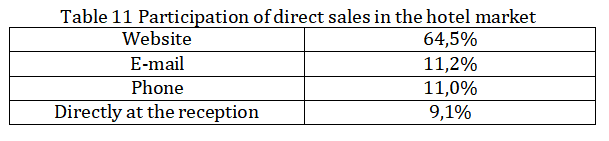

During 2021 and 2022, the Booking.com system will function with 7 hotels (with 5 stars) in Belgrade, as well as 4 hotels in Vojvodina and 3 in Central Serbia. The table below gives the ratings of certain hotels' guests on a scale of 6 to 10, and the ratings (on the website) are rated as follows: A strong 6+. superb 7+, very good 8+, exceptional 9+, and excellent 10+;
The Hotel Prezident Palace Belgrade received the highest rating in 2021 and 2022, taking into consideration the most significant aspects, with an average rating of 9.6 recorded taking into account online reviews. The Ambasador Niš Hotel is ranked second in terms of guest ratings, with an average rating of 9.4 and a total of 1116 reviews on social networks at the time of observation (second half of 2021). The third highest-rated hotel is the Tonati hotel in Vrnjaka Banja, which has a rating of 9.3 and 1897 reviews on social media.
Conclusion
Analysis of the content research of the hotel's Facebook and Instagram posts during the observed period reveals that the content addressed to current and potential guests, as the target population, is represented on the hotel's official website by notifications that were previously published on the hotel's official website. This implies that when it comes to spreading information, these two networks, as communication channels via which hotels are presented to the public, play the same function as the website, which is the major communication channel. The hotel's Facebook presentation is distinguished by the continual publishing of various forms of hotel content throughout the business year, with text statuses with photographs accounting for more than 60% of the total during the business year. Due to the emergence of the pandemic caused by the Covid-19 virus in 2020 and 2021, all hotels, even 4- and 5-star hotels, functioned under special, very tough conditions, and traffic and the number of visitors declined dramatically compared to the results reached in 2019. As a consequence of business that necessitated epidemiological measures, as well as travel limitations for foreign guests, the hotel's lodging capacity was occupied at just 10 to 15% of its capacity, compared to prior years.
In this sense, hotel guests evaluated numerous characteristics and conditions of business and service for guests who stayed in 4- and 5-star hotels in the Republic of Serbia via the booking.com website, and five of the most characteristic measures stand out, namely:
- general security of hotel guests,
- mandatory physical distancing between hotel guests, and between guests and hotel staff;
- general cleanliness and disinfection, i
- food and drink safety;
- adopting and implementing a business plan for the duration of the pandemic;
The rapid development and application of social networks in the hotel industry (along with the dynamic development of the Internet) have primarily resulted in the rapid transfer of information, with the potential for further acceleration, with the goal of more efficient placement of accommodation capacities. It is undeniable that this application serves the objective of maximizing the competitive edge of Serbia's 4- and 5-star hotels. In an effort to increase competition, social media have had a significant influence on the business of tourist and hotel companies, and therefore on the users of their services, which has changed the means of building relationships between them. On the other hand, customers, or future hotel guests, are increasingly using social media since they are exceptionally well educated and have an increasing number of requirements and expectations that must be met. Creating online associations and following people on social media also enables tourism and hotel companies to gather critical information about their guests and future service users, allowing them to construct databases about them, which are also required for most marketing operations. It has been shown that no other media offers as many communication chances as social networks. Based on the study given in the article, it is possible to infer that, without exception, all hotels have taken the role and importance of communication via social media and networks seriously, and that they are highly cautious about their depiction in consumer communication. Keeping that in mind, hotels frequently hire teams of individuals who are solely responsible for that element of the company. Communication via social networks offers simple and better interaction with target groups, and by using such a quick and inexpensive platform, you can also learn firsthand what is done successfully in a company and what may be improved. It can be concluded that building long-term and quality relationships with users of social media and networks, creating online communities that become the audience, constant followers of that hotel, all of which affect the building of a positive image of the hotel, and thus the realization of better business results, is necessary for a successful hotel business. It was indicated that the hotel should be present on as many communication channels as possible and available to users for all kinds of information on those channels. That information and content should be creative and interesting, and it should be constantly renewed and supplemented on all social media pages, such as Facebook, Twitter, or YouTube, to avoid the negative aspects of out-of-date and incorrect information, and to attract a larger number of users, potential users of hotel services. Effective communication through social networks is essentially no longer an option, but rather one of the most crucial business instruments of any hotel or tourist organization, contributing to improved business outcomes and a higher degree of competitive strength. Potential tourists and hotel guests utilize social networks, which are open to everybody, as a highly active sector, and they embrace them as good contact channels with a large number of their users. Various marketing efforts via social networks, as a specialized instrument for promoting hotel services, may increase transparency and efficiency of work, as well as establish a long- term and quality relationship with its customers.
Considering the results of the research, we can confirm the stated hypothesis:
The use of current information and communication technologies can impact increasing competitiveness in the hotel industry, i.e. enhancing the degree of the hotel's competitive advantage, notably in terms of hotel management and hotel guests' usage of social networks. Hotels that use social media have a better chance of reaching their target market segments and effectively and efficiently conveying the message they aim. In other words, they can act on the market more easily and promptly than competitors who still rely on traditional ways to market communication. As a result of the use of social networks, competitive advantage is an essential functional strategy that is incorporated in the function of quality management inside the organization, which confirms the additional hypothesis. The use of social media turns out as an important feature and process in successfully managing a competitive position in the increasingly complex tourism sector, with the goal of boosting guest satisfaction and profitability as a consequence. Hotels that may immediately and in real time receive information on their guests' comments, complaints, suggestions, and new wishes and requests have the potential to react faster, implement the required adjustments, and therefore be more competitive in the market than the competition. This also confirms the second additional hypothesis, that the use of an effective social network model can be an independent strategy of market segmentation and differentiation, with a particular emphasis on all levels of quality, with the goal of evaluating and reviewing the guest's perception of the hotel company, as well as product quality and service.
Furthermore, based on the results of the research, we can also confirm the auxiliary hypotheses:
The competitive advantage, achieved in this way, using an effective model of social networks, can be an independent strategy of market segmentation and differentiation, with particular emphasis on all levels of quality, with the aim of evaluating and assessing the guest's perception of the hotel company and the quality of products and services, in an effort to achieve a level of supply that ensures a higher differentiated value;
The hotel company strives to achieve one of the key strategic changes, using social networks, which refers to a specific option of differentiation strategy in order to achieve an increasing level of quality that raises the level of competitiveness;
The use of social networks, from the aspect of hotel management, should be treated as part of the organizational culture, as an integral part of the strategy, with the aim of a higher competitive position. The habits and routines of today's consumers differ significantly in terms of information gathering and decision-making independence. To a large extent, the reason is the development of internet technologies, more specifically social networks, which enable potential guests to get relevant information in real time. Today's consumers like the possibility of direct communication with the service providers they are interested in, and increasingly prefer those companies that have implemented this type of communication in their daily business. By applying an approach to communication and advertising through social networks, hotels can significantly influence the creation of their image and achieve a better competitive position in the hotel market. This further implies that with the proper use of social networks and adaptation to the new circumstances that the market requires, they will quickly amortize the high elasticity of tourist demand and be able to create greater profitability for their hotel companies.
References
2.Chen, Y. S., & Wu, S. T. (2019). Social networking practices of Viennese coffeehouse culture and intangible heritage tourism. Journal of Tourism and Cultural Change, 17(2), 186-207.
3.Cunha, M., Correia, R., & Costa, A. (2021). Social networks relevance as a promotion tool in the hotel industry: the case of Porto hotels. In 37th International Business Information Management Association Conference (IBIMA) (pp. 6194-6204). Ibima.
4.Cyr, D., Hassanein, K., Head, M., & Ivanov, A. (2007). The role of social presence in establishing loyalty in e-Service environments. Interacting with Computers, 19(1), 43–56. https://doi.org/10.1016/j.intcom.2006.07.010
5.Fan, D. X., Buhalis, D., & Lin, B. (2019). A tourist typology of online and face-to-face social contact: Destination immersion and tourism encapsulation/decapsulation. Annals of Tourism Research, 78, 102757.
6.Farooq, R., Vij, S. and Kaur, J. (2021). Innovation orientation and its relationship with business performance: moderating role of firm size. Measuring Business Excellence, Vol. 25 No. 3, 328-345
7.Fernandez, J. A., Azevedo, P. S., & Martín, J. M. (2020). Determinants of tourism destination competitiveness in the countries most visited by international tourists: Proposal of a synthetic index. Tourism Management Perspectives. 33, 100582
8.Filipić, L., 2019, Objave na društvenim mrežama kao tekstna vrsta [Posts on social networks as a text type]. Institut za hrvatski jezik, Zagreb, str.1-9.
9.Gefen, D., & Straub, D. (2005). A practical guide to factorial validity using PLS-Graph: Tutorial and annotated example. Communications of the Association for Information systems, 16(1), 5.
10.Godey, B., Manthiou, A., Pederzoli, D., Rokka, J., Aiello, G., Donvito, R., & Singh, R. (2016). Social media marketing efforts of luxury brands: Influence on brand equity and consumer behavior. Journal of Business Research, 69(12), 5833–5841. https://doi.org/10.1016/j.jbusres.2016.04.181
11.Halawani, F. M., Soh, P. C. & Muthaiyah, S. (2019). The effect of social media on hotels' business performance in the Lebanese hotel sector: Effect of social media on hotels' business performance. Journal of electronic commerce in organizations, 17 (3), 54- 70.
12.Hsu, Y. L. (2012). Facebook as international eMarketing strategy of Taiwan hotels. International journal of hospitality management, 31(3), 972-980.
13.Infante-Moro, A., Infante-Moro, J. C., Martínez-López, F. J., & García-Ordaz, M. (2015). Currícula en SI/TI en las empresas españolas: Estudio longitudinal (2001-2011). Certiuni Journal, (1), 76-85.
14.Kim, W.-H., & Chae, B. (Kevin). (2018). Understanding the relationship among resources, social media use and hotel performance. International Journal of Contemporary Hospitality Management, 30(9), 2888–2907. https://doi.org/10.1108/IJCHM-02-2017-0085
15.Kumar, M., Mamgain, P., Pasumarti, S. S., & Singh, P. K. (2022). Organizational IT support and knowledge sharing behaviour affecting service innovation performance: empirical evidence from the hospitality industry. VINE Journal of Information and Knowledge Management Systems, Vol. ahead-of-print, No. ahead-of-print.
16.Ministry of Tourism and Youth, MTO. (2023). Kategorizacija hotelskih objekata u Republici Srbiji. Government of the Republic of Serbia, Sector for Tourism
17.Petrović, P., Petrović, J. (2013). Upravljanje promenama i unapređenje dnevnog menadžmenta u hotelskoj industriji [Change management and improvement of daily management in the hotel industry], Tematski zbornik radova sa IX međunarodne naučne konferencije „Hotelska kuća“, Zlatibor: Hores and Singidunum Unviersity
18.Podovac, M., & Petrović, V. S. (2019). Role and importance of promotion through social networks on the example of tourist organizations. In Tourism International Scientific Conference Vrnjačka Banja-TISC, Vol. 4, No. 1, 536-552.
19.Republički zavod za statistiku, Anketa o stranim turistima u Republici Srbiji, Beograd, 2021., https://www.stat.gov.rs/media/358315/anketa-o-stranim- turistima-u-rsrbiji-2021.pdf
20.Sazu Sardar, D., Hossain, M. E., Kamruzzaman, M., & Ray, R. (2021). ICT APPLICATIONS IN TOURISM AND HOSPITALITY INDUSTRY OF BANGLADESH: A RESEARCH REVIEW. IJRDO –
Journal of Business Management, Vol.7, No.6, 64-74
21.Srivastava, A.P. and Joshi, Y. (2018). Examining the role of technology leadership on knowledge sharing behaviour, International Journal of Knowledge Management (IJKM), Vol. 14 No. 4, 13-29.
22.Stojković, M. (2018). Internet marketing trendovi u turizmu [Internet marketing trends in tourism]., retrieved on January 4th, 2023 from www.milanstojkovic.com
23.Tubbs, S. (2012). Komunikacija–principi i konteksti [Communication – principles and contexts]. Belgrade: Clio.
24.Veiga, C., Santos, M. C., Águas, P., & Santos, J. A. C. (2017). Are millennials transforming global tourism? Challenges for destinations and companies. Worldwide Hospitality and Tourism Themes. 9(6), 603–616. DOI: 10.1108/ WHATT-09- 2017-0047.
25.www.com/five stars/city/rs/Belgrade.sr.html
26.Xiang, Z., & Gretzel, U. (2010). Role of social media in online travel information search. Tourism Management, 31(2), 179- 188.
27.Yorkulov, M., Marjona, T., & Zarrina, B. (2022). USAGE OF ICT FOR HOSPITALITY INDUSTRY OF UZBEKISTAN: ANALYSIS AND SUGGESTIONS. British View, 7(2).
28.Živković, R., Njeguš, A., Gajić, J., Brdar, I. & Mijajlović, I. (2015). Upravljanje onlajn zajednicama u hotelijerstvu [Management of online communities in the hospitality industry]. Conference Proceedings SITCON 2015, 25.09.2015, Beograd: Singidunum
University, 133-139.
Published in
Vol. 29, No. 1, 2023.
Authors
Tamara Stanković
Slobodan Čerović
Aleksa Panić
Keywords
Licence
This work is published under the Creative Commons Attribution 4.0 International (CC BY 4.0).
Authors retain copyright over their work.
Use, distribution, and adaptation of the work, including commercial use, is permitted with clear attribution to the original author and source.
Interested in Similar Research?
Browse All Articles and Journals